Pay by Phone Casinos in Australia: Phone Bill vs PayID
 Available in AU
A practical distinction between charges to a mobile account and bank-mediated PayID deposits, including payment confirmation and casino approval.

Table of Contents
- What a Phone-Bill Deposit Means on a Mobile Casino
- How to Make a PayID Deposit and Avoid a Pending Payment
- How PayID Works from Payment to Casino Approval
- Bonus Terms to Check Before You Deposit
- No-Wagering and No-Deposit Offers: What the Terms Need to Show
- Payment References, Account Checks and Responsible Access
- What PayID Can—and Cannot—Tell You About Casino Games
- Online Payment Timing: Settlement Is Not the Same as Approval
- Paying by Phone, Paying by Card and Paying on Credit Are Different
- Free Spins and Credit-Related Claims Need Separate Verification
What a Phone-Bill Deposit Means on a Mobile Casino
“Pay by phone” can describe two different things. It may mean paying through a mobile phone account, with a charge added to a carrier bill or taken from prepaid credit. Or it may mean making a payment on a phone using a banking app. Those are not the same payment method: the first uses a telecommunications account, while the second uses a bank account.
That distinction matters when you see phrases such as “mobile casino pay by phone bill” or “online casino pay by phone.” A page may use “mobile” to describe the device, not the source of the money. A payment completed on a smartphone is not automatically billed by your phone provider. To tell what a payment actually uses, look at the named method and the action it asks you to take.
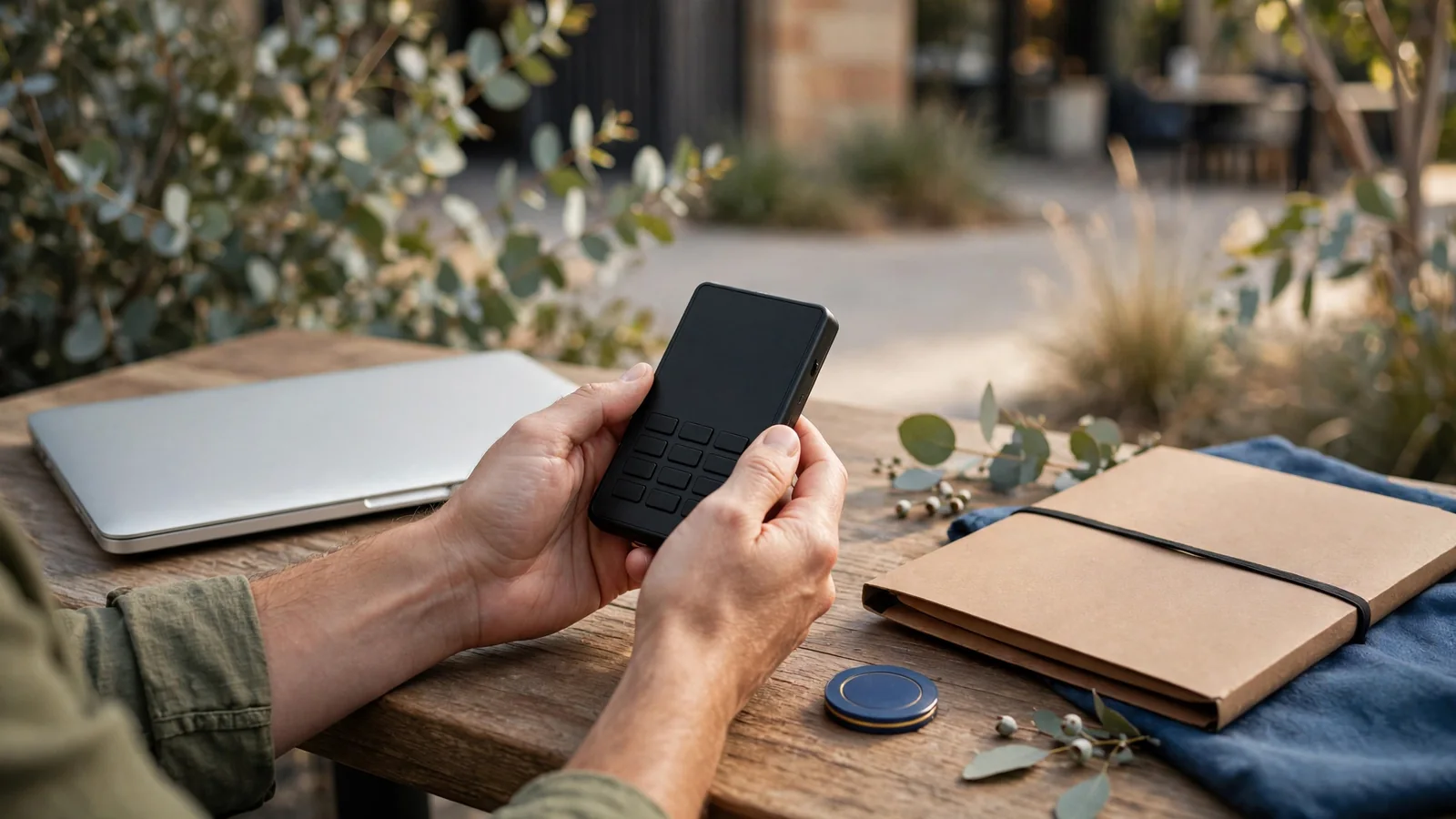
With PayID, the mobile phone is the screen and control point; the payment is confirmed through your bank. The deposit sequence is to select PayID, enter an amount and confirm the payment in your banking app. The phone bill itself is not the confirmation channel in that process. If a payment page says PayID, interpret that as a bank-mediated payment rather than a carrier-billed purchase.
If you’re considering paying by phone at an Australian-facing casino, check which deposit methods are actually available to you before choosing. Use these short profiles to see the limited verified details provided for each operator.
License: Curacao eGaming (Roby Games Ltd) You can note that Roby Casino is licensed by Curacao eGaming under Roby Games Ltd.
License: Curacao Gaming Control Board OGL/2023/176/0095 (Hollycorn N.V.) You can note that LuckyVibe holds Curacao Gaming Control Board licence OGL/2023/176/0095, under Hollycorn N.V.
License: Curacao Gaming Authority (Jumpman Gaming Ltd) You can note that DragonSlots Casino is licensed by the Curacao Gaming Authority and operated by Jumpman Gaming Ltd.
Payout speed: crypto under 1 hour, PayID 1-3 business days · Min. deposit: A$20 (A$30 to qualify for the bonus) You can deposit from A$20, though A$30 is required to qualify for the bonus. The stated payout times are under an hour for crypto and 1–3 business days for PayID.
License: Curacao, operated by Dama N.V. You can note that 7Bit Casino is licensed in Curacao and operated by Dama N.V.
License: Curacao Gaming Control Board OGL/2023/176/0095 (Hollycorn N.V.) You can note that Rollero Casino holds Curacao Gaming Control Board licence OGL/2023/176/0095, under Hollycorn N.V.
Payout speed: crypto 30-120 minutes, fiat 24-72 hours · Min. deposit: A$30 You can deposit from A$30. Stated payout times are 30–120 minutes for crypto and 24–72 hours for fiat.
License: Curacao OGL/2024/1335/0780 · Min. deposit: EUR 20 You can note that Vegaz Casino holds Curacao licence OGL/2024/1335/0780 and has a minimum deposit of EUR 20.
License: Curacao You can note that Golden Pokies is licensed in Curacao.
License: Curacao · Min. deposit: A$20 (POLi) You can make a minimum deposit of A$20 using POLi. Lucky Dreams is licensed in Curacao.
This helps resolve searches for a “pay by phone bill casino” or “mobile slots pay by phone bill.” The wording may express a wish to use a phone, a phone account, or both, but the method name is what identifies the route. If the stated route is PayID, expect to use a banking app. Do not treat the presence of a mobile-friendly page as proof that the amount will appear on your telecommunications bill.
What the PayID steps look like on a phone
First, the payment screen presents PayID as the deposit method. You then enter the amount you intend to send. The next action takes place in your bank’s app, where you confirm the payment. In other words, the casino-side screen starts the deposit, while the bank app is where you authorise the transfer.
The amount entry and payment confirmation are separate stages. Entering an amount on a casino screen does not, by itself, complete a payment. Likewise, opening a banking app does not mean a deposit has been authorised: you still need to review and confirm the payment there. Keeping those stages distinct makes it easier to understand whether you have merely begun a deposit or actually approved it through your bank.
The same sequence applies whether you hold the phone in portrait or landscape, use a larger screen, or access the service from another device. The important distinction is not the device size. It is whether the payment instruction names PayID and sends you to your banking app for confirmation. A phone can be the device used to make a bank payment without being the account that funds it.
If you were expecting a carrier charge, pause when the payment flow instead asks you to use a bank app. That is a different funding route from billing a purchase to a mobile account. Do not proceed on the assumption that “pay by mobile phone” and “pay by phone bill” mean the same thing.
Read the payment label, not the screen size
A small-screen layout can make the process look like a phone purchase, but the visual design does not identify the funding source. Check the method name shown before you enter an amount. For PayID, the defining actions are selecting it, entering the amount and approving the payment in your banking app. That is the relevant distinction when comparing a phone-bill deposit with a payment made by phone.
The phrase “online casino pay by phone bill” also does not establish that a phone provider is involved. A service could be accessed on a phone while a bank handles the transaction. Conversely, a true carrier-billed payment would need to identify the phone account or provider as the payment route. Do not infer one method from the other.
In Australia, real-money online casino games, including pokies and table games, are prohibited services when offered to people located in the country. The Interactive Gambling Act 2001 places the restriction on operators providing those games to Australian customers. Payment terminology does not change that legal position, and a mobile interface does not make an otherwise prohibited service lawful.
Legal Restriction
Real-money online casino games, including pokies and table games, are prohibited for people located in Australia under the Interactive Gambling Act 2001.
So, when you encounter wording about paying by phone, separate the device from the funding source. A PayID deposit is initiated on the payment screen and confirmed in your bank’s app. That is a mobile banking payment—not a phone-bill charge.
How to Make a PayID Deposit and Avoid a Pending Payment
A PayID payment and a casino account credit are separate events. A transfer can leave your bank successfully yet fail to appear in an account balance straight away. One reason is that the operator’s payment system may need a reference that links the incoming funds to a particular player. If that identifying detail is missing or incorrect, the payment may not be matched automatically.
There is an important Australian legal context: the Interactive Gambling Act 2001 prohibits operators from providing real-money online casino games, including pokies, poker and table games, to people located in Australia.
How a deposit is matched to an account
The payment starts in your banking app. After selecting PayID as the payment option and entering an amount, you confirm the transfer through your bank. The payment can reach the casino within seconds—typically in the range of three to fifteen seconds—but arrival at the recipient does not by itself prove that the casino’s system has identified which player account to credit.
That identification may depend on the payment reference. The operator can ask you to enter your player ID or username in the reference field so its system can associate the incoming payment with your account. The reference functions as a matching key: the bank processes the transfer, while the casino uses the information attached to it to identify the intended account.

The exact wording matters. If the payment instructions request a player ID, entering a display name instead may not produce the match the system expects. Likewise, a mistyped username or an omitted reference can leave the incoming funds unassigned. In that case, the payment may remain pending until support staff can investigate and process it manually.
Before confirming a transfer
Read the payment instructions provided for the transaction rather than relying on a reference used previously. Confirm which identifier is required, where it belongs, and whether any other reference text must be retained. Check the PayID recipient name before approving the payment, and compare the requested amount with the amount shown in your banking app.
A payment reference is not a substitute for checking the recipient. These details solve different problems: the recipient check helps establish who will receive the funds, while the reference helps the recipient identify the account the payment is meant to match. If either detail is unclear, do not assume that a transfer will be credited correctly.
Minimum deposit amounts can differ. PayID deposits commonly begin in the AUD 10–20 range, while some services accept a smaller amount through bank transfer. Treat the displayed minimum as specific to the payment option and instructions in front of you; the availability of a lower bank-transfer minimum does not establish the minimum for PayID.
If the payment is pending
First compare the completed bank transaction with the payment instructions: check the recipient and the reference you entered. Keep the transaction confirmation so the payment can be identified if support asks for details. Do not send a second payment simply because the account balance has not changed; if the first transfer later matches, a duplicate could create a separate issue.
- Enter the player ID or username exactly as requested in the reference field
- Keep the transaction confirmation for support
- Check the PayID recipient name before approving
- Use a display name if a player ID is required
- Send a second payment if the balance has not changed
- Assume a transfer is credited just because it settled
If the reference is missing or wrong, the payment may need manual handling rather than automatic crediting. Contact the relevant payment or account support channel and provide the transaction information they request. Avoid changing or recreating the payment details based on guesswork. A pending status does not, on its own, tell you whether the transfer failed, arrived without a usable reference, or is waiting for review.
The practical distinction is between sending the money and assigning it to an account. A correct reference can support automatic matching; an incorrect or absent one can interrupt that step even when the transfer itself has arrived.
How PayID Works from Payment to Casino Approval
PayID is not a charge added to your mobile phone bill. It is an identifier-based payment service provided through Australia’s New Payments Platform (NPP). An identifier, such as a mobile number or email address, can be linked to a bank account so that payments can be directed without entering the recipient’s account details for every transfer.
The identifier is a way to address a payment; it is not the payment account itself. Money moves through the banking system, while the PayID helps identify where it should go. The mobile-number option can make the service sound like phone billing, but the number acts as a payment identifier. It does not mean the amount is added to your telecommunications bill.
Two separate systems
A payment involving PayID has two distinct parts. First, the NPP carries the payment between participating financial institutions and settles it in real time. Second, the receiving service must recognise the incoming funds and decide how to apply them to its own records. Those tasks are connected, but one does not automatically complete the other.

For a casino account, the payment rail can report that a transfer has settled, while the account balance still waits for the casino’s systems to match and process it. That distinction explains why “sent” or “settled” does not necessarily mean “available in the account.” The bank-side transfer and the recipient’s account processing are separate events.
PayID itself does not know whether a transfer relates to a casino, a purchase or another kind of payment. It carries payment information through the banking network; it does not assess an account, approve a deposit, or determine whether a gambling service may be offered. Any account-level decision belongs to the receiving service, not to the identifier or the NPP.
Why approval can lag behind settlement
If a transfer has settled but has not appeared in an account, the delay can occur after the banking step. The receiving service may need to identify the payment and update its own records. A mismatch between the transfer information and the account it is meant to reach can therefore create a handling issue even when the payment has already moved through the network.
The same separation matters when a service processes a withdrawal. PayID may carry a payment in real time once it has been released, but it cannot make the receiving service review or release that payment sooner. A specialist review identifies the casino’s internal withdrawal review as a possible source of delay, rather than the payment rail. This is a description of the two stages, not a promise about how quickly any particular account will be approved.
PayID is an identifier-based service provided through Australia’s New Payments Platform (NPP) that links a mobile number or email to a bank account.
That makes it useful to distinguish three statuses: a payment can be initiated, settled by the payment network, and then processed by the recipient. The words shown in a banking app or account page may refer to different stages. If they appear inconsistent, first establish which stage each status describes; a bank-side confirmation does not, by itself, confirm that the recipient has completed its own processing.
PayID’s technical role should also be kept separate from the legal status of the service receiving a payment. Under Australia’s Interactive Gambling Act 2001, operators must not provide real-money online casino games to people physically located in Australia. A payment method does not change that restriction or make a gambling service lawful. Understanding how an identifier and payment network work is not an endorsement of using them to fund prohibited online casino services.
Bonus Terms to Check Before You Deposit
A deposit promotion is a set of conditions attached to a balance, not simply extra money added without restrictions. The headline amount alone does not tell you whether the bonus can be used freely or what must happen before any resulting winnings can be withdrawn. Read the full terms before accepting an offer, and treat each condition as part of the cost of using it.
The payment method does not determine the bonus rules. Searching for a casino that takes phone-based payments, or for pokies associated with a particular payment option, does not establish that a promotion is available or suitable. A payment label describes how money may be sent; it does not explain wagering, withdrawal or game conditions.
Wagering requirements
Find the wagering requirement and identify exactly what amount it applies to. The terms may calculate it against the bonus, the deposit, or both. Those bases produce different obligations, so do not rely on a short promotional summary if the detailed rules use a different calculation.
Check which activity counts towards wagering and how progress is displayed. If the terms do not make the calculation clear, you cannot reliably estimate how much play is required before a withdrawal can be requested. Also check whether the requirement applies only to bonus funds or affects the whole balance.
Maximum bet
A maximum bet sets a ceiling on the amount you can stake while a bonus is active. Check whether the limit applies to each individual wager and whether it covers all eligible games. A bet above the stated cap may breach the promotion’s rules and affect eligibility for bonus-related winnings.
Do not assume that a limit shown in a short offer description is the complete rule. Read the conditions for any restrictions that apply while wagering is in progress.
Game weighting
Game weighting determines how much a game contributes towards completing a wagering requirement. Some games may count less than others, or may be excluded. That means a balance can be used on a game without the play making equivalent progress towards the requirement.
Game weighting details
Game weighting determines how much a game contributes towards a wagering requirement; some games may count less than others or be excluded entirely.
Check the eligible-game list and the contribution assigned to each category. If a game’s weighting is unclear, do not assume it counts fully. The name of a game provider or the fact that a promotion is described as a pokies offer does not, by itself, show which games qualify.
Time limit and maximum cash-out
Look for the time limit for completing the wagering requirement and note when the countdown begins. If the requirement is not completed in time, the terms may specify what happens to the bonus and any associated winnings. Check this before accepting, rather than assuming unused funds remain available.
A maximum cash-out condition can cap the amount withdrawable from a promotion, even after its other requirements are met. Confirm whether the cap applies to bonus winnings or to a wider balance, and whether the rules distinguish between bonus funds and deposited funds.
These checks help explain what an offer requires; they do not make it appropriate to use. Australian law prohibits operators from providing real-money online casino games to people physically located in Australia. A payment method or bonus description does not change that legal position.
No-Wagering and No-Deposit Offers: What the Terms Need to Show
“No wagering” and “no deposit” describe different offer claims. Neither label tells you, by itself, what you must do before withdrawing a reward, whether the offer is available to you, or whether a payment method is involved. A PayID or phone-related payment option does not establish that a promotion exists or determine its conditions.
For a no-wagering claim, look for the exact rule governing the reward and any winnings from it. The wording should make clear whether wagering is genuinely absent or whether conditions still apply before funds can be withdrawn. Check for limits on eligible games, a maximum cash-out, an expiry condition, or other restrictions. If the offer page uses “no wagering” prominently but leaves the withdrawal rules unclear, the label alone is not enough to establish what you would receive.

A no-deposit claim needs a different check: determine whether the offer actually requires a deposit at any stage. Read the full terms for eligibility conditions and any actions required to claim or use the reward. A promotion described as no-deposit may still have conditions that affect whether its value can be withdrawn. The headline does not replace those rules, and it should not be treated as proof that the offer is unconditional.
The same distinction applies when wording combines the claims, such as a no-deposit reward advertised as having no wagering. Each part needs to be checked separately. One phrase concerns whether a deposit is required; the other concerns wagering conditions. Neither settles questions about cash-out restrictions or eligibility. If the terms do not explain how those conditions work, the claim is not sufficiently clear to rely on.
“Pay by phone” can also be ambiguous: it may refer to using a phone to make a payment, or suggest that a charge is added to a phone bill. That wording does not verify a no-deposit offer, establish that phone-bill billing is supported, or change the terms attached to a promotion. Treat payment wording and offer wording as separate claims.
There is also a legal issue specific to Australia. The Interactive Gambling Act 2001 prohibits operators from providing real-money online casino games to people located in Australia, including pokies and other casino-style games. A no-wagering or no-deposit label does not alter that position. It is not a reason to treat an online casino promotion as a lawful service for Australian residents.
Attention A no-wagering or no-deposit label does not make a gambling service lawful for Australian residents under the Interactive Gambling Act 2001.
When you encounter these claims, rely on the complete conditions rather than the headline or payment wording. If the conditions do not clearly state what is required and what restrictions apply, the label alone cannot answer those questions.
Payment References, Account Checks and Responsible Access
A payment reference is part of the information that links a transfer to your account. When a casino’s instructions require your player ID or username in the PayID reference, enter it exactly as requested. The payment can reach the recipient while still failing to match automatically to your player account if that identifier is missing or incorrect. In that case, the deposit may stay pending until support staff can investigate and process it manually.
Before confirming a transfer, check that the recipient name and payment details match the instructions shown to you. Then review the reference field separately: do not assume that a correct amount or recipient will compensate for an omitted identifier. Keep the transaction record and reference details so you can explain what you sent if the account balance does not update. Do not make another payment simply because the first one has not appeared; first establish whether it is pending and what action is required.
The same separation matters when you later request a withdrawal. A specialist review reports that identity checks are generally required before a player’s first withdrawal. Completing KYC verification in advance can reduce the chance that document requests interrupt processing after you have submitted a payout request. Follow the operator’s stated document instructions and make sure the account details you provide are consistent with your identity. A payment being sent successfully does not itself complete these checks or guarantee that a withdrawal will be approved.
Searches mentioning phone-bill payments, Boku, no-deposit offers or BetStop can mix together separate questions. A payment method’s name does not establish whether a particular service accepts it, whether an offer applies, or whether the service is available to you. Nor does the phrase “not on BetStop” establish that a gambling service is lawful or suitable. In Australia, the Interactive Gambling Act 2001 prohibits operators from providing real-money online casino games, including pokies and table games, to people located in the country. Do not treat a payment route or an account-check process as evidence that access is permitted.
Responsible handling therefore starts before money moves: understand what the payment reference must contain, avoid sending funds when the recipient or instructions do not match, and complete required KYC verification before requesting a first withdrawal. If you need help with gambling-related harm, Gambling Help Online is a support service in Australia.
What PayID Can—and Cannot—Tell You About Casino Games
PayID describes a way to move money; it does not identify a casino’s games, bonuses or operating status. A payment option cannot tell you whether a site offers pokies, whether a particular game is available, or what conditions apply to a promotion. Those are separate claims and should not be inferred from the presence of PayID.
Payment vs Games
A payment method like PayID only describes how money moves and provides no information about a casino’s games or bonuses.
The wording “pay by phone” can also blur two different ideas: using a phone to make a payment and having a charge added to a phone bill. With PayID, the deposit is initiated by choosing PayID, entering an amount and approving the transfer in your banking app. That process does not, by itself, mean the amount will appear on your mobile bill.
The same distinction applies to searches about phone-based casino slots or games. Paying through a mobile banking app does not make a game a mobile game, confirm that it works on a particular device, or establish that it is available to Australian users. Payment information and game information answer different questions.
A PayID option is not evidence that a casino bonus is available either. A promotion’s existence and conditions need to be established separately; the payment rail does not supply those details. Likewise, a site’s use of PayID is not a reliable way to assess its claims about games or offers.
For people in Australia, there is also an important legal boundary: the Interactive Gambling Act 2001 prohibits operators from providing real-money online casino games to people located in the country. That includes casino-style games such as pokies and table games. A payment method does not change that rule or make an operator’s service lawful.
A reference to “Deutschland” does not alter what PayID means. It remains a payment service, not a catalogue of games, a bonus description or proof that a particular site is available in a given country. Keep the question narrow: the deposit flow tells you how a payment is initiated; it tells you nothing dependable about the games or promotions attached to a site.

Online Payment Timing: Settlement Is Not the Same as Approval
A payment can move quickly through a banking network and still take longer to appear as an available balance. These are separate stages: settlement moves the money between accounts; the recipient’s processing determines when the transaction is recognised or released.
PayID transfers use the New Payments Platform (NPP) and can clear within minutes once released. That describes the payment rail, not a casino’s handling time. A transfer may have settled while a casino account still shows a withdrawal as pending, because the operator has not yet reviewed or approved the request. The delay at that point is internal processing, not necessarily a problem with the bank transfer.
A specialist review has reported that some highly rated PayID casinos review and approve withdrawal requests for verified accounts within two to six hours. Treat that as a report about those operators, not a general service standard or a guaranteed turnaround. Processing can differ, and an approval is not the same as the funds reaching your bank account.
This distinction helps diagnose where a delay may be occurring. If a request is still awaiting review, the payment provider cannot complete that review on the operator’s behalf. If the operator has released the payment but it has not arrived, the remaining wait concerns transfer processing. Check the transaction status with the relevant provider rather than assuming that a fast-settling network means every stage is immediate.
The same logic applies when a mobile phone is involved. Using a phone to access a banking app does not make a transfer a phone-bill charge, nor does it determine how quickly a recipient processes a payment. The payment method, the device used to initiate it, and the recipient’s approval process are distinct parts of the timeline.
Payment Timeline
You start the deposit by choosing the method and entering the amount on the payment screen.
The funds move through the banking network (e.g., NPP) and settle between accounts.
The recipient recognizes the funds and processes them into your account balance.
In Australia, the Interactive Gambling Act 2001 prohibits operators from providing real-money online casino games to people physically located in the country. Timing descriptions do not change that legal position. A reported processing window should not be read as an endorsement, assurance of access, or promise that a withdrawal will be approved.
Paying by Phone, Paying by Card and Paying on Credit Are Different
“Pay by phone” can describe different payment mechanisms. A mobile phone may simply be the device you use to open your banking app and authorise a PayID transfer. That does not make the payment a charge to your phone bill. Phone-bill billing is a separate arrangement: the cost is added to a mobile account or deducted from prepaid credit. The wording alone does not tell you which mechanism a service uses.
A card deposit is different again. You enter card details into the payment flow, and the transaction is processed through the card network. Visa and Mastercard are widely accepted for deposits, but that does not mean a card will also be available for withdrawals. The processor may make card payouts slower or may not support them at all.
The distinction matters when you see references to paying by phone credit. “Credit” could mean mobile airtime or a phone-bill charge, but it can also be read as borrowing through a credit facility. Those are not interchangeable with a payment made from your bank account or with a debit-card transaction. A payment label is not enough to establish how funds are sourced or whether the method is available.
Before entering payment details, identify the actual route shown at checkout: a banking-app transfer, a card transaction, or a charge handled by a mobile provider. Then check the provider named in the payment instructions and the method’s terms. Do not assume that a mention of a phone, phone credit or a named billing service means your mobile account will be charged.

For withdrawals, read the operator’s payment rules separately from its deposit options. Some operators may require a withdrawal to return through the deposit method where that is possible. That condition can become relevant when a card was used to deposit but the processor does not handle card withdrawals. In that case, the available payout route depends on the operator’s rules and the payment processor, not on the fact that the original deposit was initiated on a phone.
Free Spins and Credit-Related Claims Need Separate Verification
A reference to free spins does not show that a payment method unlocks them. PayID describes how a payment is initiated; it does not establish that an offer exists, who can claim it, or what the spins can be used on. Treat any such promotion as a separate set of conditions, not as a feature of paying from a phone.
Read the offer’s own wording before relying on a free-spin claim. Check whether it is available to the relevant account, what action—if any—is required to qualify, which games are included, and what restrictions apply to winnings. A promotional label alone cannot tell you these details, and an offer should not be assumed to be withdrawable cash.
“Credit” can also mean different things: promotional credit, a balance shown in an account, or money borrowed or charged to a payment card. Those are not interchangeable. A payment method does not prove that credit is offered, that a card can fund gambling, or that any credit-related promotion is available. Confirm the meaning and conditions in the operator’s terms rather than inferring them from the wording of a page.
There is also a legal boundary: under Australia’s Interactive Gambling Act 2001, operators may not provide real-money online casino games to people physically located in Australia. That includes pokies and other casino-style games. A claim about free spins or credit does not change that restriction, and it should not be read as evidence that such a service is lawful or available to Australian residents.
Can you withdraw casino winnings using PayID?
Yes, some casinos offer PayID withdrawals. The casino’s review and approval process can take longer than the PayID transfer itself.
Do Australian online casinos support PayID withdrawals?
Some casinos offer PayID withdrawals, but support varies by operator. Real-money online casino games are prohibited for operators offering them to people in Australia under the Interactive Gambling Act 2001.
What are the minimum and maximum deposit limits at PayID casinos?
PayID casino deposits commonly start at AUD 10–20. Your bank sets PayID transaction limits; most major Australian banks allow AUD 1,000–5,000 per transaction, with daily limits of AUD 10,000–20,000.
What is the minimum PayID deposit?
PayID casino deposits commonly start at AUD 10–20.
How long do PayID deposits take?
PayID deposits typically reach the casino within 3–15 seconds. The casino may take longer to credit your account if your payment reference is missing or incorrect.
Published by the Levelupcasino1.net team.