Australian Pokies Parlours: Casino Access and Online Claims
 Available in AU
A parlour is a physical area for electronic gaming machines, while website access and promotional claims require separate scrutiny.
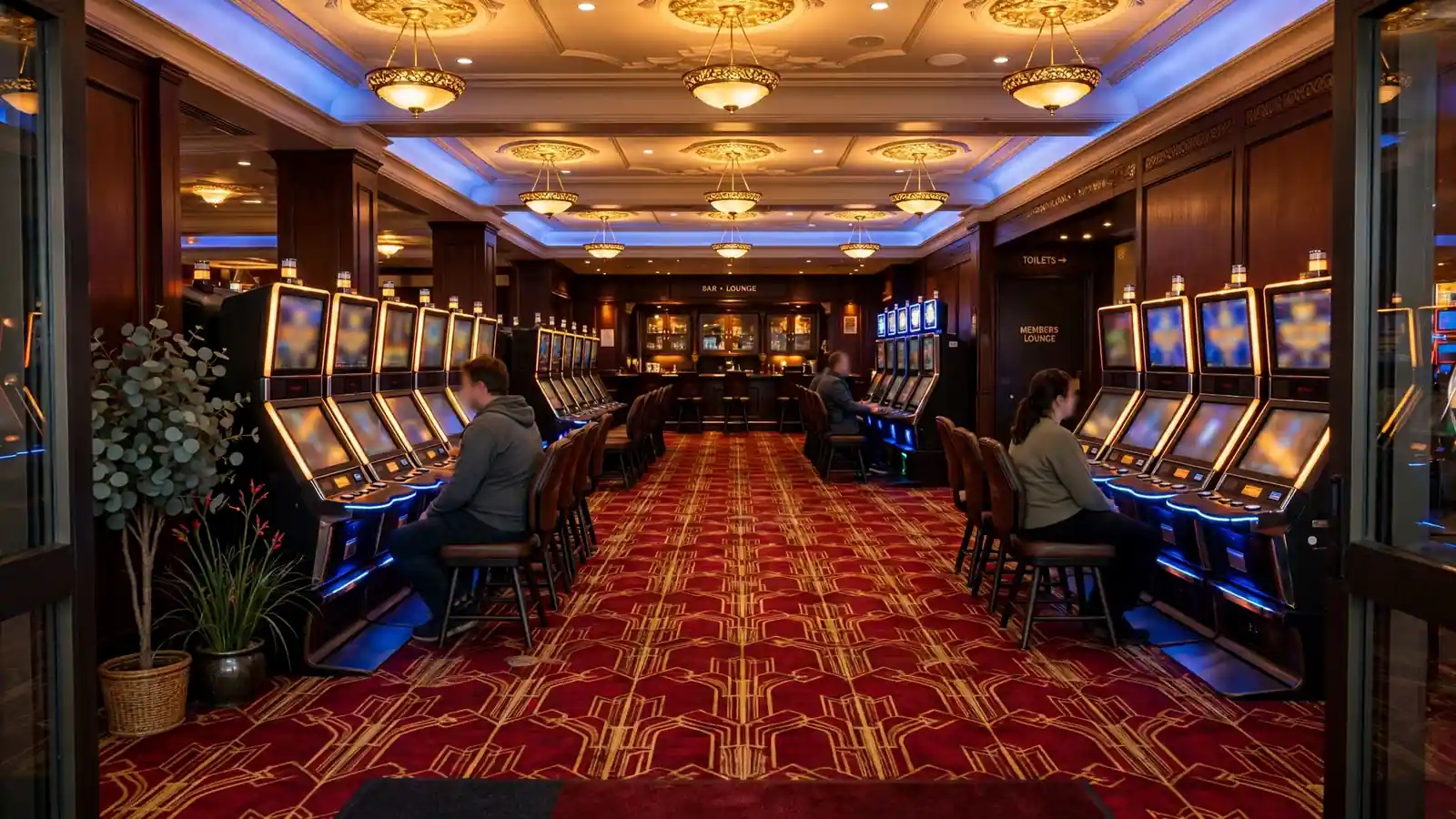
Table of Contents
- What a Pokies Parlour Means in an Australian Casino
- Where Australian Casino Venues Are Located
- Casino Entry, Opening Hours and Access
- What a Casino Review Can Verify
- Online Play and the Limits of Website Access
- Free Chips and Spins: What the Terms Need to Show
- How to Assess a Sign-Up Bonus Claim
- Bonus Claims and Australian Gambling Enforcement
- Parlour Pokies and Casino Machine Counts
- Real-Money Casino Claims and Australian Licensing
What a Pokies Parlour Means in an Australian Casino
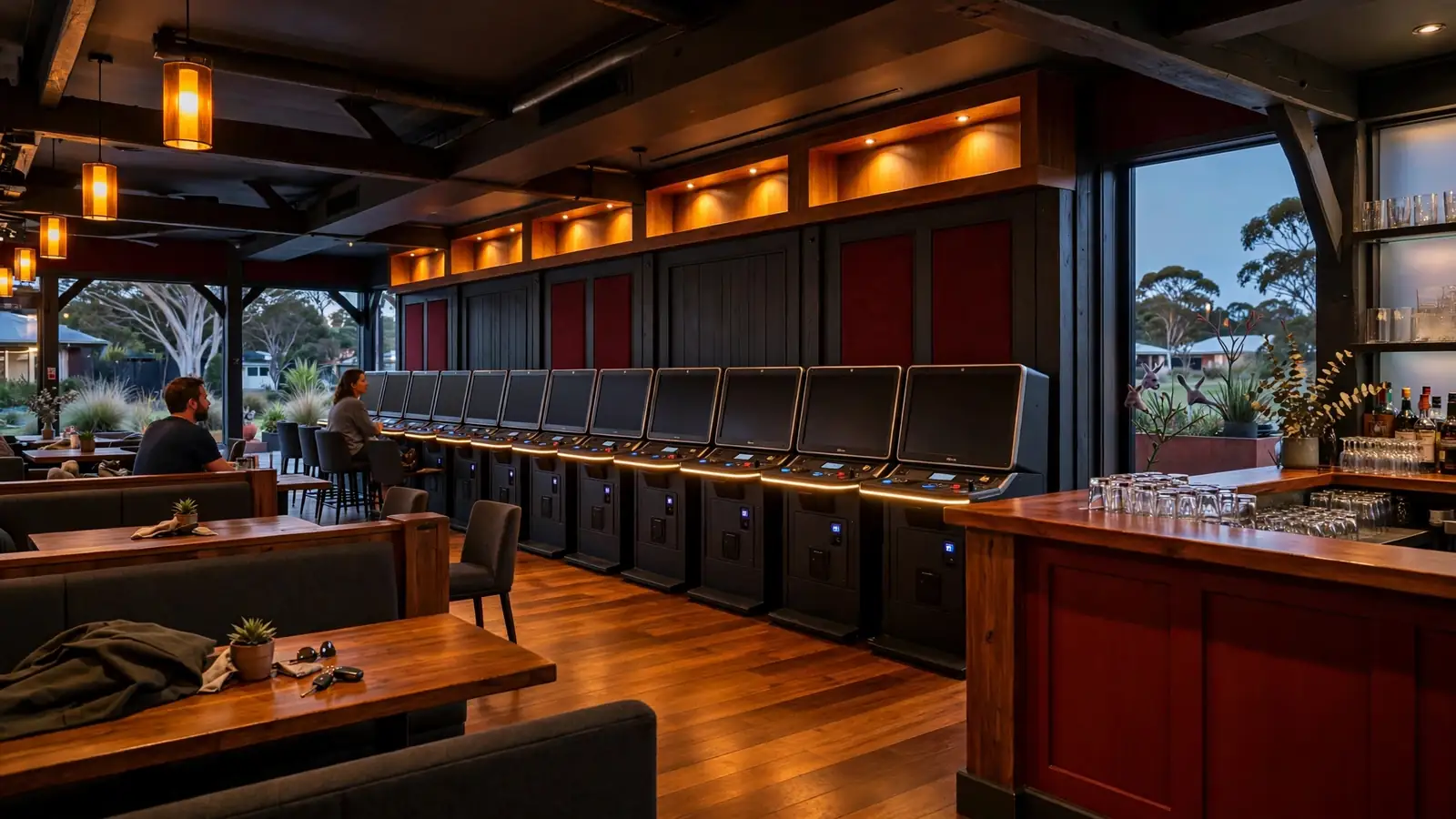
In an Australian casino, a “pokies parlour” generally means a physical area where electronic gaming machines are grouped for use by patrons. “Pokies” is the familiar Australian term; “parlour” points to the room or section of a venue, not to a separate kind of casino or a distinct online product. The phrase is descriptive rather than a dependable label for a particular floor plan: venues may use different names for their gaming areas, and the arrangement can vary from property to property.
The key distinction is the setting. A parlour is part of a physical venue. You travel to the casino, enter its premises and use machines located there. The word does not, by itself, identify a website, an app or a service that can be used remotely. A page that uses “parlour” in its name or description is still a website if the activity takes place through an internet connection rather than at a machine inside a venue.
Within the building, a parlour may be one defined room, a set of connected areas or a section of a larger gaming floor. The term alone cannot tell you which arrangement applies. Nor does it tell you how large the area is, what other facilities are nearby or what rules apply to that particular property. Those details belong to the venue, not to the general meaning of “pokies parlour.”
Choosing a pokies parlour casino in Australia is easier when you can check what is actually known about each option. Use these verdicts as a concise reference while deciding what matters to you.
License: Curacao eGaming (Roby Games Ltd) Roby Casino is listed with a Curacao eGaming licence held by Roby Games Ltd. This gives you a stated licensing detail to consider.
License: Curacao Gaming Control Board OGL/2023/176/0095 (Hollycorn N.V.) LuckyVibe is listed with a Curacao Gaming Control Board licence, OGL/2023/176/0095, held by Hollycorn N.V. You can use this licence information as a reference when assessing the casino.
License: Curacao Gaming Authority (Jumpman Gaming Ltd) DragonSlots Casino is listed with a Curacao Gaming Authority licence held by Jumpman Gaming Ltd. That licensing detail is the available point of reference for you.
Payout speed: crypto under 1 hour, PayID 1-3 business days · Min. deposit: A$20 (A$30 to qualify for the bonus) Ricky Casino lists crypto payouts under one hour and PayID payouts in 1–3 business days. Its minimum deposit is A$20, or A$30 to qualify for the bonus.
License: Curacao, operated by Dama N.V. 7Bit Casino is listed as Curacao-licensed and operated by Dama N.V. These are the available details for you to consider.
License: Curacao Gaming Control Board OGL/2023/176/0095 (Hollycorn N.V.) Rollero Casino is listed with a Curacao Gaming Control Board licence, OGL/2023/176/0095, held by Hollycorn N.V. You can take this stated licence information into account.
Payout speed: crypto 30-120 minutes, fiat 24-72 hours · Min. deposit: A$30 MrPacho lists crypto payouts in 30–120 minutes and fiat payouts in 24–72 hours. Its minimum deposit is A$30.
License: Curacao OGL/2024/1335/0780 · Min. deposit: EUR 20 Vegaz Casino lists a Curacao licence, OGL/2024/1335/0780, and a minimum deposit of EUR 20. These details offer you a concise starting point for evaluating it.
License: Curacao Golden Pokies is listed as Curacao-licensed. No other operator details were provided, so this is the available factual point for you to consider.
License: Curacao · Min. deposit: A$20 (POLi) Lucky Dreams is listed as Curacao-licensed and has a minimum deposit of A$20 via POLi. These are the available details to guide your consideration.
This distinction helps when reading descriptions of casino facilities. A statement that a property has a parlour describes an on-site area; it does not establish that every casino uses that name or has an identical layout. A venue’s own information is needed to understand its rooms and facilities. The broad term is useful for identifying the kind of space being discussed, but it is not a substitute for property-specific details.
A casino parlour should also be distinguished from a gaming room in another kind of venue. Similar language can be used in different contexts, but the phrase “casino parlour” refers to an area within a casino when the surrounding description identifies that setting. The label by itself does not establish who operates a venue or what licence applies. In Australia, casino properties operate under licences issued by their state or territory jurisdiction; the name given to a room does not change the property’s status.
The scale of the casino sector is separate from the meaning of the term. A specialist review has described Australia as having more than 20 full-scale casinos across all eight states, but a count in a review is a snapshot rather than a permanent definition of what constitutes a parlour. The existence of a particular number of casinos does not mean that each has a separately named room, or that the rooms can be compared by name alone.
The phrase can become confusing when it appears alongside online gambling language. An online service may borrow familiar Australian terms to make its pages sound connected to local venues, but vocabulary does not make an internet service a physical casino. A real venue has premises and machines on site; an online interface displays digital content on a device. The two may use similar words, yet the way a person accesses them and the rules that govern them are not the same.

That difference matters in Australia because the Interactive Gambling Act 2001 prohibits operators from providing real-money online casino games, including slots, to people physically located in the country. A site’s use of casino terminology does not turn online play into an in-person visit or make it equivalent to a physical parlour. Conversely, mentioning a physical casino parlour does not describe an online service.
When you encounter the term, read the surrounding context before drawing conclusions. References to a room, floor, venue or on-site facilities indicate a physical casino setting. References to logging in or using a website indicate an online setting, regardless of whether the page calls itself a parlour. The word is a clue to the subject being described, not proof of the nature or status of the service.
In short, a pokies parlour in a casino is an on-site area associated with electronic gaming machines. It is not a formal guarantee of a particular room design, a separate casino category or an online gambling option. Keeping those distinctions clear makes the term easier to interpret without treating a familiar label as evidence about a venue or website.
Where Australian Casino Venues Are Located
Australian casino venues are spread across the states and territories rather than concentrated in one area. A specialist review has counted gambling facilities in 147 Australian cities, but that figure should be read as a published snapshot, not a permanent map: venues open, close or change status, and a city count depends on what the review includes.

The same specialist review identifies Sydney, New South Wales, as the largest gambling city in its coverage, with 11 facilities. That describes the review’s count of facilities in the city; it does not mean that every facility is a casino, or that Sydney’s total cannot change. For a location check, distinguish a city-level listing from a venue’s own address. The first helps show regional spread, while the second identifies a particular property.
The Northern Territory provides a smaller-scale example. A specialist review lists three casinos across three cities in the territory. In that account, Alice Springs is the city with the most casinos, at one. The wording can sound contradictory because the figure is a tie at one venue per city, rather than a city having several casinos. Treat the count as a snapshot from that review, not a guarantee that the territory’s present-day distribution is unchanged.
One specific Northern Territory address is Lasseters Casino, at 93 Barrett Drive in Alice Springs, NT 0870. The address places the venue in the town rather than merely identifying it as a Northern Territory property. This distinction matters when comparing listings: a territory-wide count describes the broad pattern, while a street address can be used to identify an individual site.
Other examples show how casino locations are tied to different local areas. Jupiters Gold Coast Casino & Hotel is on Broadbeach Island, on the Gold Coast. Country Club Casino is listed on Country Club Avenue in Prospect, within Meander Valley. These names and locations help orient a reader, but they should not be taken as a complete directory of Australian venues.

A practical way to read geographic claims is to separate three levels of detail: the state or territory, the city or locality, and the venue address. A broad count can indicate how widely facilities are distributed; a city figure can compare places within one source’s coverage; and an address can help identify a named property. None of those levels automatically verifies that a listing is current. If you are planning a visit, check the venue’s own current location information rather than relying on an old city count or an undated directory entry.
This approach also prevents unlike categories from being mixed together. A listing may count gambling facilities across a city, while another may refer only to casinos. When the category is not stated clearly, the figures cannot be compared reliably. Location names are useful starting points, but the scope and date of a count determine what it actually tells you.
Casino Entry, Opening Hours and Access
Major Australian casinos operate around the clock, so their casino floors are not limited to daytime or evening opening hours. That does not necessarily mean every service within a property is available at all times: restaurants, entertainment areas and other facilities may follow their own schedules. If a particular amenity matters to your visit, check its hours with the venue rather than inferring them from the casino’s operating hours.
Entry Requirements
Entry to a casino is restricted to adults aged 18 and over. Valid photo identification is mandatory for entry into major casinos.
Entry to a casino is restricted to adults. The minimum age is 18 across Australia, and valid photo identification is required to enter major casinos. Bring an accepted, current form of photo ID and allow for it to be checked at the entrance. Being accompanied by an adult does not make someone under 18 eligible to enter the casino.
The same age and identity checks apply when you are seeking access to a VIP area or parlour. The label describes a venue’s access category; it does not replace the legal entry requirement or remove the need to show photo ID. Any additional admission arrangements for a particular area are separate from the basic rules for entering the casino.
For a straightforward visit, distinguish the casino’s continuous operating hours from the opening times of individual facilities, and treat age and identification as entry requirements rather than optional checks. A venue may have different arrangements for areas outside the casino, but those do not change the minimum age for casino entry. If you are unsure whether your identification will be accepted, confirm the venue’s requirements before travelling.
What a Casino Review Can Verify
A useful review separates facts that can be checked from impressions that only describe how a venue or website presents itself. For a physical casino, the strongest starting point is the property’s identity and the jurisdiction responsible for its licence. Australia regulates casinos at state and territory level, and each property operates under a licence issued by its local jurisdiction. A review should make clear which venue it is discussing and identify the relevant licensing authority, rather than using “licensed” as an unexplained label.

That distinction matters when you read a pokies parlour review. A polished page, professional photographs or detailed descriptions may help you understand what the reviewer is showing, but none of those features establishes the venue’s legal status. Appearance is evidence of presentation, not evidence of a licence. Look for claims that can be matched to information from the relevant jurisdiction or the venue itself, and note whether the review gives enough detail to identify the property and the authority involved.
The same test applies to statements about the venue’s facilities and services. A review can report what it observed or what the operator describes, but those are different kinds of evidence. Clear wording tells you which is which: “the venue lists” attributes a claim to the operator, while “the reviewer observed” describes a reported visit. If the page presents either as independently confirmed without explaining how, treat the distinction as unresolved.
Pay attention to scope. A review of one property does not establish conditions at every casino in the same state, and a general description of Australian casinos does not prove a detail about a particular venue. Licensing is attached to the individual property and its local jurisdiction. A review that blurs those levels may sound authoritative while leaving the key point unclear.
You can also assess the review’s method. Does it name the venue precisely? Does it distinguish direct observation from information supplied by the operator? Does it identify the jurisdiction connected to the licence? Are statements specific enough to check, or do they rely on broad phrases such as “fully regulated” without saying what that means in context? These questions do not require you to accept the reviewer’s verdict; they help you see what the verdict rests on.
- Match claims to jurisdictional information
- Distinguish direct observations from operator claims
- Identify the specific licensed property
- Assume a professional design proves a licence
- Use a general description to verify a specific venue
- Rely on broad phrases like “fully regulated” without context
A review may include opinions about atmosphere, service or the overall visit. Those can be useful as personal impressions, but they are not substitutes for verifiable information. Several reviews repeating the same claim do not automatically turn it into an official record, particularly if they appear to rely on one another rather than separate evidence.
For a reliable assessment, keep the categories apart: venue identity, jurisdictional licensing, operator descriptions, reviewer observations and subjective opinion. A review earns confidence through precise attribution and checkable detail, not through confident wording or a convincing design. When those categories are mixed together, you cannot tell whether a statement is an established fact, a reported experience or simply promotional language.
Online Play and the Limits of Website Access
A website loading on your device tells you that the address can be reached through your connection. It does not show that the service is authorised to offer online casino games in Australia. The same limit applies if an account page opens, displays a balance or lets you sign in: those are signs that the site is operating technically, not evidence of Australian approval.
The legal test concerns what the operator provides and where you are. Under the Interactive Gambling Act 2001, operators must not provide real-money online casino games to people physically in Australia. Casino-style games such as slots, poker and table games fall within the prohibited services. An offshore operator may describe its service as licensed elsewhere, but a foreign licence does not authorise it to provide those services to customers in Australia.
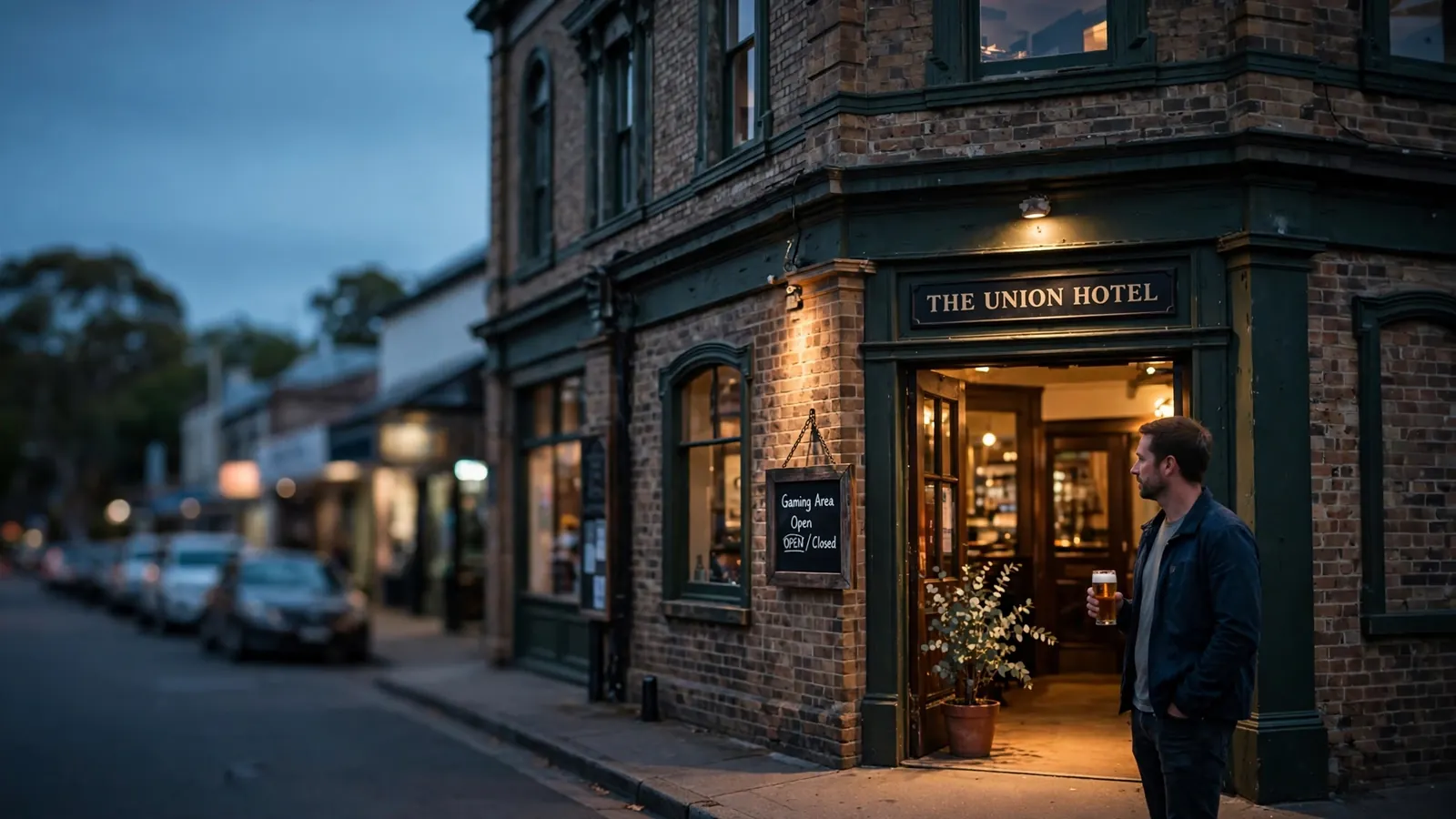
This distinction matters when you look for a digital version of a physical casino’s gaming area. A familiar name, logo or visual design can make a web page look connected to an Australian venue. Appearance alone does not establish who runs the site, what legal entity holds any overseas approval, or whether the service may lawfully be offered here. A claim of “online play” should therefore be read as a description made by the site, not as proof of Australian authorisation.
Why an address may stop working
The Australian Communications and Media Authority (ACMA) enforces the federal interactive gambling rules. It can ask Australian internet service providers to block access to websites that provide prohibited interactive gambling services or advertise them in Australia. Blocking can change what happens when you enter a particular web address: the page may fail to load through one provider even though the address still exists elsewhere.
A specialist review of Australian gambling websites has reported that blocking action can affect which domains resolve through Australian providers and that alternate addresses may appear over time. ACMA has also taken blocking action involving illegal gambling services, including alternate domains associated with Fair Go. These examples describe enforcement and address changes; they do not establish that a replacement domain is lawful, approved or operated by the same entity.
If a site publishes a new address after an earlier one becomes inaccessible, the change is not a regulatory endorsement. It may simply mean that the operator has made the service available at another domain, while the legal position remains unchanged. Likewise, a site that continues to accept account traffic has not passed an Australian licensing test. Access and authorisation are separate questions.
ACMA Enforcement
The Australian Communications and Media Authority can request internet service providers to block websites that provide or advertise prohibited interactive gambling services in Australia.
What “free play” can tell you
A page labelled as free play may be presenting a mode without real-money wagering, but the label by itself does not explain how the mode works. It does not tell you whether the site also offers a real-money version, whether account functions lead to paid play, or what happens to any displayed credits. Treat the wording as a claim about the page, not as evidence that the wider service is authorised.
To understand what you are viewing, distinguish between access to a page and the activity it enables. A demonstration screen, an account dashboard and a real-money game are not interchangeable merely because they appear on the same website. The relevant legal issue is whether prohibited interactive gambling is being provided to people in Australia, not whether the site calls a section a parlour, a casino or a free mode.
The practical conclusion is narrow: a working address, an active account or a newly published domain cannot establish Australian authorisation. ACMA blocking can affect access, while alternate domains can appear; neither a failure to load nor a successful connection settles the legal status of the service.
Free Chips and Spins: What the Terms Need to Show
“Free” describes a promotion’s headline, not necessarily what a person must do to qualify or what they can use. A free-chip claim may refer to a credit added to an account, while a free-spin claim may refer to a limited-use feature on a particular game. Neither phrase, by itself, explains whether a deposit is required, whether the credit can be withdrawn, or what conditions apply.
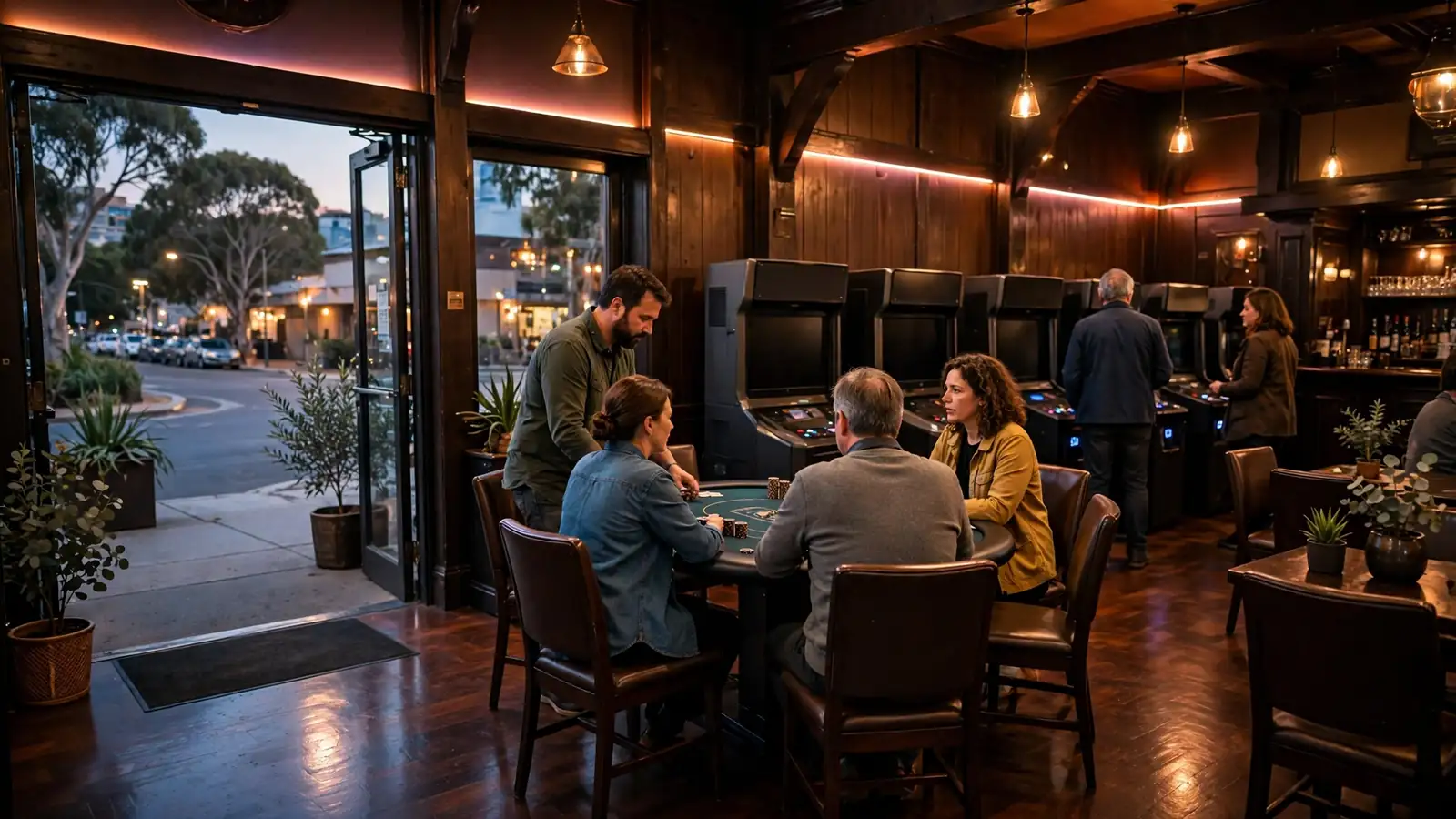
Read the full terms as a set of steps and restrictions. First, identify the entry condition. The promotion may require a deposit, account registration, a code, or another qualifying action. If the wording calls an offer free but requires a deposit, it is not free of cost in the ordinary sense. If the condition is unclear, the headline does not resolve that ambiguity.
Next, find out what the credit can do. Terms may limit chips to specified games or restrict spins to a named game. They may also set an expiry, require use in a particular order, or remove unused promotional credit. These details determine whether the stated benefit is usable and when it stops being available. A claim that omits them cannot tell you the practical value of the promotion.
Separate promotional credit from withdrawable funds. A balance shown on an account may combine different types of credit, but the terms can treat them differently. Check whether winnings from chips or spins are subject to a maximum withdrawal, additional play requirements, or other restrictions. “Winnings” does not necessarily mean an amount that can be withdrawn immediately; the rules may make further conditions apply first.
Look for conflicts between the headline and the detailed wording. For example, a page may describe spins as free while its terms require a deposit to unlock them, or present chips as cash-like while making them usable only under specified conditions. The detailed rules define the claim. If they are missing, difficult to locate, or inconsistent with the headline, you cannot reliably determine what is being offered.
Analyzing Promotions
Determine if the offer requires a deposit, registration, or a code to qualify.
Check if the chips or spins are limited to specific games or have an expiry date.
Check if winnings are subject to maximum withdrawal limits or additional play requirements.
Also check which version of the terms applies and who the stated promotion is for. A page may use broad wording while the conditions narrow eligibility or exclude particular users. Do not infer eligibility from a banner, an account screen, or the fact that promotional wording appears on a page. Those elements do not explain the conditions.
In Australia, these phrases need particular care: real-money online casino games, including slots, are prohibited for operators to provide to people in the country, and advertising such services to Australian audiences is also restricted. A free-chip or free-spin label should therefore be read as a claim to examine, not as an invitation or evidence that a promotion is an authorised Australian service. The terms can clarify what the claim says; they do not change the legal status of the service or make a promotional balance equivalent to cash.
How to Assess a Sign-Up Bonus Claim
A no-deposit sign-up bonus is a promotional description, not a regulatory category. The words may suggest that an account can receive a benefit without an initial payment, but they do not show who provides the service, what law applies to it or whether it can lawfully be offered to people in Australia. Treat the claim and the provider’s legal status as separate questions.
This distinction matters when a page uses language such as “pokies parlour” alongside a sign-up offer. A parlour may refer to gaming machines in a physical venue, while a website may use similar wording to describe online play. The shared vocabulary does not make the website an Australian casino or connect its promotion to a locally licensed venue. A brand name, logo, venue-like design or reference to Australian players is not proof of authorisation.
For online casino-style gambling, the legal position is not established by the offer’s label. The Interactive Gambling Act 2001 prohibits operators from providing real-money online casino games to people who are physically in Australia. That includes casino-style games such as slots, poker and table games. A “no-deposit” description does not create an exception to that rule, nor does describing an offer as a sign-up reward change the nature of the underlying service.
To assess a claim, separate the statements on the page into what they actually establish and what they merely imply. A promotion may state that an account is eligible for a benefit, or set out conditions for receiving it. Those statements concern the promotion as presented. They do not establish that the service is permitted to provide online casino gambling to Australians, that a local regulator has approved it, or that the advertised venue exists as a physical casino. Even detailed wording cannot substitute for evidence of lawful status.
The same applies when an offer calls itself a “pokies parlour casino no-deposit bonus.” Combining familiar terms can make the service sound local, but the phrasing is not a licence, an official approval or a legal classification. Likewise, “no deposit” describes only one claimed feature of the promotion. It does not establish that the service is free of other conditions, and it says nothing by itself about whether the operator is allowed to offer casino gambling online in Australia.
Attention: A professional-looking page, local references, or a no-deposit bonus offer are features of presentation and do not constitute evidence of Australian regulatory approval.
A useful reading method is to keep two records in mind. First, note what the promotion explicitly says: who it is for, what action it asks you to take and what restrictions it states. Second, ask whether any independent legal basis is identified for providing the underlying service to people in Australia. Do not treat the first record as an answer to the second. Promotional detail can make a claim look precise while leaving the central question of authorisation unanswered.
The federal regulator is the Australian Communications and Media Authority, or ACMA. Its work includes applying the Interactive Gambling Act 2001 and overseeing compliance with federal rules for interactive gambling. Where a website provides prohibited interactive gambling services, or advertises them to people in Australia, ACMA can ask Australian internet service providers to block access to it. This is an enforcement mechanism, not an approval process for promotions: a page’s visibility or wording does not show that ACMA has endorsed it.
A sign-up offer therefore cannot be used as a shortcut for judging legitimacy. A professional-looking page, an apparent account area, local references or an offer described as a no-deposit bonus are all features of presentation. None changes the law governing the service. Nor should a promotion be taken as evidence that a physical casino is offering online play; the two settings have different legal and operational contexts.
If the claim is unclear about who provides the service or what is being offered, that uncertainty should remain visible in your assessment rather than being filled with assumptions. Most importantly, do not infer Australian approval from promotional language. The relevant question is not whether the offer sounds local or generous, but whether the underlying online casino service may lawfully be provided to people in Australia.
Bonus Claims and Australian Gambling Enforcement
A bonus attached to a casino-style website is a promotional claim, not evidence that the service is lawful in Australia. Enforcement activity provides a separate way to understand the market: the Australian Communications and Media Authority (ACMA) can act against illegal gambling services and websites that promote them. A reward described as a parlour bonus does not change the status of the service offering it.
ACMA’s blocking record shows the scale of this work. Since November 2019, the regulator has caused more than 1,455 websites connected with illegal gambling or affiliate promotion to be blocked after enforcement action. Blocking a website is a regulatory measure, not a finding that every page on it made the same claim or offered the same service. It does show that a promotional site can be part of the enforcement picture, even when it is not itself the gambling operator.
There is also evidence that enforcement has led some illegal services to leave the Australian market. Published accounts give different totals for withdrawals since ACMA began enforcing the rules in 2017: one reports more than 210 services, while another puts the figure above 190. Both indicate that withdrawal from the market has been one outcome of enforcement.
For you, this context changes how a bonus claim should be read. Promotional language may describe a reward, but it cannot establish that the service behind it is authorised to provide online casino games to people in Australia. Nor does a website’s continued presence, or the appearance of a replacement address, reverse an enforcement action. A claim can remain visible after the wider service has attracted regulatory attention.
Bonus Claims
- Promotional rewards are not evidence that a service is lawful in Australia
- ACMA actively blocks websites connected with illegal gambling
- Enforcement can lead illegal services to withdraw from the Australian market
- Affiliate sites may be blocked even if they do not run the games themselves
ACMA’s figures also cover different kinds of websites. Gambling operators and affiliate sites are not identical: an affiliate may direct visitors toward a service rather than run the games itself. Enforcement against either kind of website does not turn a bonus into proof of legitimacy. The useful distinction is between what the promotion promises and what the regulator’s actions say about the service and its promotion.
When you encounter an offer for a casino-style game online, treat the bonus wording as marketing, not as a regulatory signal. Enforcement records concern the legality and promotion of services; promotional terms concern what a page claims to provide. Keeping those questions separate prevents a prominent reward from being mistaken for evidence that the service is acceptable for Australians.
Parlour Pokies and Casino Machine Counts
The national figure for casino gaming machines is useful as a measure of scale, but it does not tell you how many machines are in a particular parlour. Across Australian casinos, the total number endorsed on venue licences and installed is 3,308. That is an aggregate across casino licences and installations, not a venue-by-venue inventory.
The distinction matters because a national total combines machines associated with separate casino properties. It cannot show how that total is divided between them, or how many machines are assigned to a particular area within one property. A reference to parlour pokies therefore should not be read as a specific count unless it is tied to information about the individual venue.
Nor does the national figure establish how many machines are operating at a given moment. It describes the number endorsed on licences and installed, not real-time availability, the number in use, or the configuration of a gaming area. Those are different questions and require venue-specific information.
The total also cannot be used to calculate a typical casino’s machine count. A national sum does not show whether installations are evenly distributed or concentrated in a smaller number of venues. Dividing the figure by a venue count would produce only an arithmetic average, not a verified count for any actual casino.

When you see a machine total, check what it counts: a national or venue-level figure, licence endorsements, installations, or machines currently operating. These categories are not interchangeable. For understanding parlour pokies at one casino, the national total provides context only; it does not substitute for a reliable figure tied to that venue and its licensed installation.
Real-Money Casino Claims and Australian Licensing
A “real-money” label describes what a service claims you can do with it; it does not prove that the service is authorised to offer that activity to people in Australia. A site may display games, accept account traffic or load through an alternate web address. None of those technical signs establishes Australian approval.
The distinction is between a physical casino and an online service. Australian casino properties operate under licences issued by their state or territory. That venue-licensing arrangement does not extend to online casino services. Under the Interactive Gambling Act 2001, operators cannot lawfully provide real-money online casino games to customers who are physically in Australia. Casino-style offerings such as poker and table games are also treated as prohibited interactive gambling services in this context.
This means that a claim about depositing, wagering or withdrawing real money is not evidence of a locally authorised online casino. Nor does a foreign licence change the Australian legal position. The relevant question is not whether a site works on your device, but what service it offers and whether that service may be provided to people in Australia.
The same caution applies to wording that links a physical pokies parlour with online real-money play. A parlour is part of a land-based venue; its existence or licensing does not validate a similarly named website or establish that online play is permitted. Keep those settings separate when interpreting a site’s claims.
If a page presents real-money online casino play as available to Australians, treat that statement as a claim about the service, not proof of authorisation. Access, account functions and branding are features of a website; they are not a regulatory test.
Written by the editors at Levelupcasino1.net.