Best Pokies in Tasmania: What to Check Before Visiting
 Available in AU
Practical checks cover venue access, machine availability, return claims and the limits of online play in Tasmania.
Table of Contents
- Check What “Open” Means Before You Travel
- What a Pokie’s Return Can—and Cannot—Tell You
- Planning a Visit from the Airport or CBD
- Venue Machines and On-Site Safeguards
- Online Pokies, the Spirit of Tasmania and What the Law Allows
- Why “24-Hour Pokies” Needs a Venue-Specific Check
- How to Read Claims About Tasmanian Pokies
- Online Play on a Phone or Browser: Legal Limits
- CBD Clubs: Confirm the Venue, Not Just the Search Term
- Cashless Play and Searches for Newcastle
Check What “Open” Means Before You Travel
Before setting out for pokies in Tasmania, confirm two separate things: whether the venue is admitting customers and whether its gaming machines are operating. A venue can be open for another service while its gaming area is unavailable, or its advertised hours may not describe the hours for every part of the premises. Treat “open” as a question about the specific activity you plan to make the trip for, not just whether a venue appears on a map.
Start with information published by the venue itself. Check its current website or official social channels for notices about temporary changes, restricted access or interruptions. If the information is unclear, contact the venue using a number or contact method from its own official listing. Ask directly whether the gaming area is open when you intend to arrive and whether machines are available for play. This gives you a more useful answer than asking only whether the venue is open.
Be precise about what you need confirmed. “Are you open?” can produce an answer about the premises generally, rather than the gaming machines. Instead, ask whether customers can enter the relevant area and whether the machines are operating at the time you expect to be there. If you are travelling a long way, ask whether anything could change that answer before you arrive, and what channel the venue uses to post updates.
If you’re looking for pokies options in Tasmania in 2026, this list gives you a concise reference to review. Check the details that matter to you before choosing where to play.
License: Curacao eGaming (Roby Games Ltd) Roby Casino is listed with a Curacao eGaming license held by Roby Games Ltd.
License: Curacao Gaming Control Board OGL/2023/176/0095 (Hollycorn N.V.) LuckyVibe is listed under Curacao Gaming Control Board license OGL/2023/176/0095, held by Hollycorn N.V.
License: Curacao Gaming Authority (Jumpman Gaming Ltd) DragonSlots Casino is listed with a Curacao Gaming Authority license, with Jumpman Gaming Ltd named as the operator.
Payout speed: crypto under 1 hour, PayID 1-3 business days · Min. deposit: A$20 (A$30 to qualify for the bonus) Ricky Casino lists crypto payouts as taking under an hour and PayID payouts as taking 1–3 business days. The minimum deposit is A$20, or A$30 to qualify for the bonus.
License: Curacao, operated by Dama N.V. 7Bit Casino is listed as operating under a Curacao license, with Dama N.V. named as its operator.
License: Curacao Gaming Control Board OGL/2023/176/0095 (Hollycorn N.V.) Rollero Casino is listed under Curacao Gaming Control Board license OGL/2023/176/0095, held by Hollycorn N.V.
Payout speed: crypto 30-120 minutes, fiat 24-72 hours · Min. deposit: A$30 MrPacho lists crypto payouts as taking 30–120 minutes and fiat payouts as taking 24–72 hours. Its minimum deposit is A$30.
License: Curacao OGL/2024/1335/0780 · Min. deposit: EUR 20 Vegaz Casino is listed with Curacao license OGL/2024/1335/0780. Its minimum deposit is EUR 20.
License: Curacao Golden Pokies is listed with a Curacao license.
License: Curacao · Min. deposit: A$20 (POLi) Lucky Dreams is listed with a Curacao license and a minimum deposit of A$20 when using POLi.
A listing on a map, directory or older travel page is a starting point, not live confirmation. Such pages can remain visible after details have changed, and a posted schedule may not account for a temporary closure or an operational interruption. Compare third-party information with the venue’s own current communications. If the sources differ, contact the venue rather than choosing whichever answer is more convenient.
The same caution applies to broad searches for Tasmanian pokies that are open now, open early or open late. Those phrases do not identify a particular venue or establish that its machines are running. A result may describe normal public opening hours, refer to a different service, or be out of date. A claimed opening time is useful only if it applies to the gaming area and the day you plan to visit.
When you call, keep the questions practical. Confirm the day, the expected arrival period, access to the gaming area and machine operation. If you are relying on a posted schedule, check that it is current and applies to the venue you intend to visit. If the answer is uncertain, ask whether the venue can confirm closer to your departure. You can then decide whether the trip is worth making or whether to check again later.
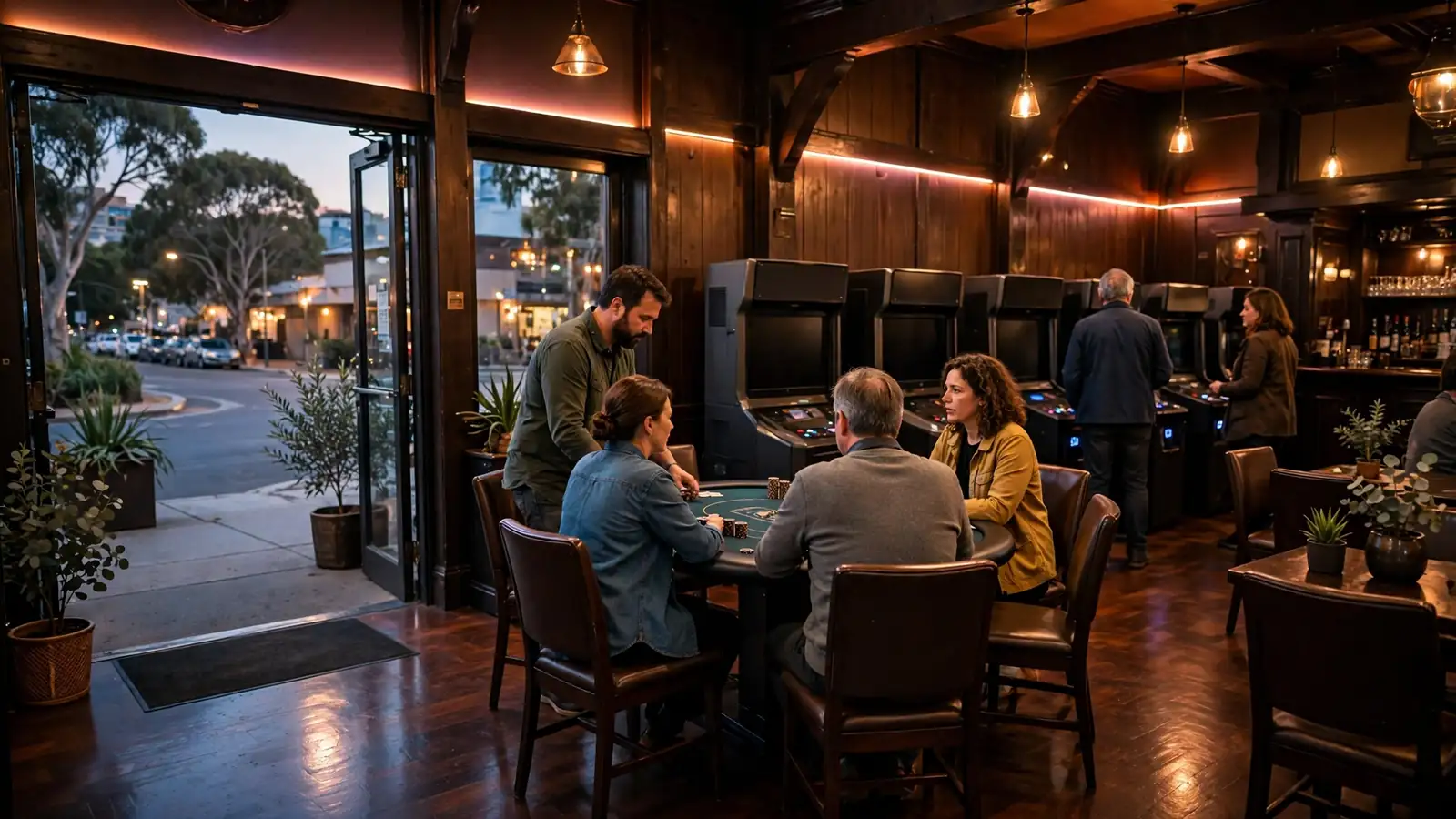
Do not treat a result for a familiar name as proof that the place you have in mind is in Tasmania, is the venue you intend to visit, or has operating machines. Verify the venue’s full identity through its own information before relying on a listing. A search result that combines a place name with “pokies” can bring together unrelated businesses or pages; the relevant check is always with the specific premises.
It also helps to separate a temporary interruption from a change to the venue’s usual schedule. If a venue confirms that its gaming area is operating, that answer describes the situation at the time of the check, not a guarantee that circumstances cannot change before you arrive. For a longer journey, check again shortly before leaving, particularly if the venue has posted a notice or could not give a definite answer earlier.
Keep the confirmation tied to your actual plan. If your arrival time changes, or you decide to visit a different venue, the earlier answer may no longer apply. Recheck the relevant premises rather than assuming that nearby venues have the same access or machine status. The practical rule is simple: confirm the particular venue, the gaming area and the intended visit period through a current venue-controlled channel. That is how to distinguish a useful travel check from a broad claim that pokies are open somewhere in Tasmania.
- Check the venue’s official website or social channels for notices
- Contact the venue directly to ask if the gaming area is open
- Be precise about the activity and the time of your visit
- Rely on map listings or older travel pages for live confirmation
- Assume “open” refers specifically to the gaming machines
- Use broad search phrases like “open now” as proof of access
What a Pokie’s Return Can—and Cannot—Tell You
A claim that a pokie has a strong return does not, by itself, identify a particular game as the best choice in Tasmania. Return to player (RTP) describes a game’s designed return across play over time; it is not a forecast of what you will receive from a session or an individual spin. To interpret the figure, you need to know which game setting it refers to and what the figure can reasonably tell you.
A specialist review reports that some providers let casinos choose between multiple RTP settings for the same pokie. If that applies to a game, its return percentage may differ from one casino to another even though the game’s name and visible features are the same. A figure quoted without identifying the relevant setting therefore may not describe the version available at a particular venue. The claim needs to be tied to the game and the setting, rather than treated as a universal property of the title.
This distinction matters when you compare claims about pokies at Tasmanian casinos. A list that labels one game “best paying” based only on an RTP figure may leave out the detail that determines whether the figure applies to the version being discussed. Before relying on a specific claim, check whether it names the casino and the applicable setting, and whether the information comes from material that actually identifies those details. If the setting is not stated, you cannot tell from the figure alone whether it describes the version you would encounter.
RTP is also not a promise that a machine will return a particular amount to you. It describes an aggregate property of the game, not a schedule of individual outcomes. Even when a setting is known, the percentage cannot tell you whether your next spin will win, how much it will pay, or how a particular session will end. Treating an average return as a personal prediction confuses a long-run measure with a short-run result.
Each spin is generated independently by a Random Number Generator. That means the outcome of one spin does not set up, improve or worsen the outcome of the next. A run of losses does not make a win “due”, and a recent win does not mean the following spin is less likely to pay. The machine does not keep a memory of your previous results that can be used to predict what it will do next.
This independence also explains why a return figure cannot help you time a session. A higher quoted RTP does not mean that wins arrive at regular intervals, or that a player who continues long enough will personally receive the stated return. The figure concerns the game’s design across play, while an individual’s results can vary. No short sequence of spins can establish the setting or reveal what the next outcome will be.
When you see a claim about the best pokies in Tasmania, separate three questions: what game is being described, which RTP setting the claim concerns, and what the figure actually means. A claim that answers only the first question is incomplete if the setting can vary. A claim that supplies a setting still does not predict your results. And a comparison based on return alone does not establish that one game is best for every player or every session.
Return to Player (RTP)
A game’s designed return across play over time, expressed as a percentage; it is an aggregate property and not a prediction of individual session results.
The same caution applies to claims about pokies in a city or casino area. Location language does not clarify the RTP setting, and a game’s presence at a venue would not prove that a published figure applies to its configuration there. Keep the venue claim and the return claim distinct: one concerns where a game is said to be available; the other needs to identify the relevant setting and explain the limits of the statistic.
A careful reading is more useful than a ranking built from an unexplained percentage. Treat RTP as information about a game setting, not as a guarantee, a prediction or a strategy for choosing the next spin. When a claim does not specify which setting it means, its precision is limited; when it does, the independent nature of each spin still limits what the figure can tell you about your own outcome.
Planning a Visit from the Airport or CBD
A location-based search is only a starting point. “Near the airport” or “near the CBD” describes a relationship to a place, not a confirmed venue, a precise distance or a practical route. Before building a trip around a result, identify the place you will be travelling from and the destination you intend to reach. Then check that the result refers to a specific venue, rather than a broad area or a page that repeats location terms.
An airport search can be ambiguous because the word may refer to the airport itself, the surrounding area or a trip beginning there. A result mentioning pokies at an airport does not, by itself, establish that machines are inside the terminal or elsewhere on airport property. Treat the venue’s own name and location as essential details; do not infer that a result is on-site just because the airport appears in its description.

The same issue applies to a CBD search. “CBD” needs a city or town attached to it to be useful for planning. A page that uses the phrase without clearly identifying its location may not help you decide whether a venue fits your itinerary. If you are already in a particular central area, compare the venue’s stated address with that starting point rather than relying on a general “nearby” label.
For any starting point, check the full venue address and place it against your actual destination. A map result can help you see whether the two locations are in the same area, but a pin or short label is not a substitute for confirming the venue’s identity. If the map and venue information appear to describe different places, pause before setting out and resolve the discrepancy. Avoid assuming that a result’s position, name or snippet is enough to identify an entrance or the correct building.
Searches for pokies near you depend on the location being used by your device or account. That location may not match where you plan to go, especially if you are arranging a visit before arriving. Set the starting point to the place relevant to your journey, then assess each result against the destination you have in mind. “Near me” can change when your location changes; it is not a fixed description of a venue.
Broad regional terms need the same care. A search about northern Tasmania may return results from different towns or areas, so the region alone cannot tell you whether a venue is convenient for your route. Narrow the choice by the specific place you will be visiting, and inspect each result individually rather than treating a regional label as a travel recommendation.
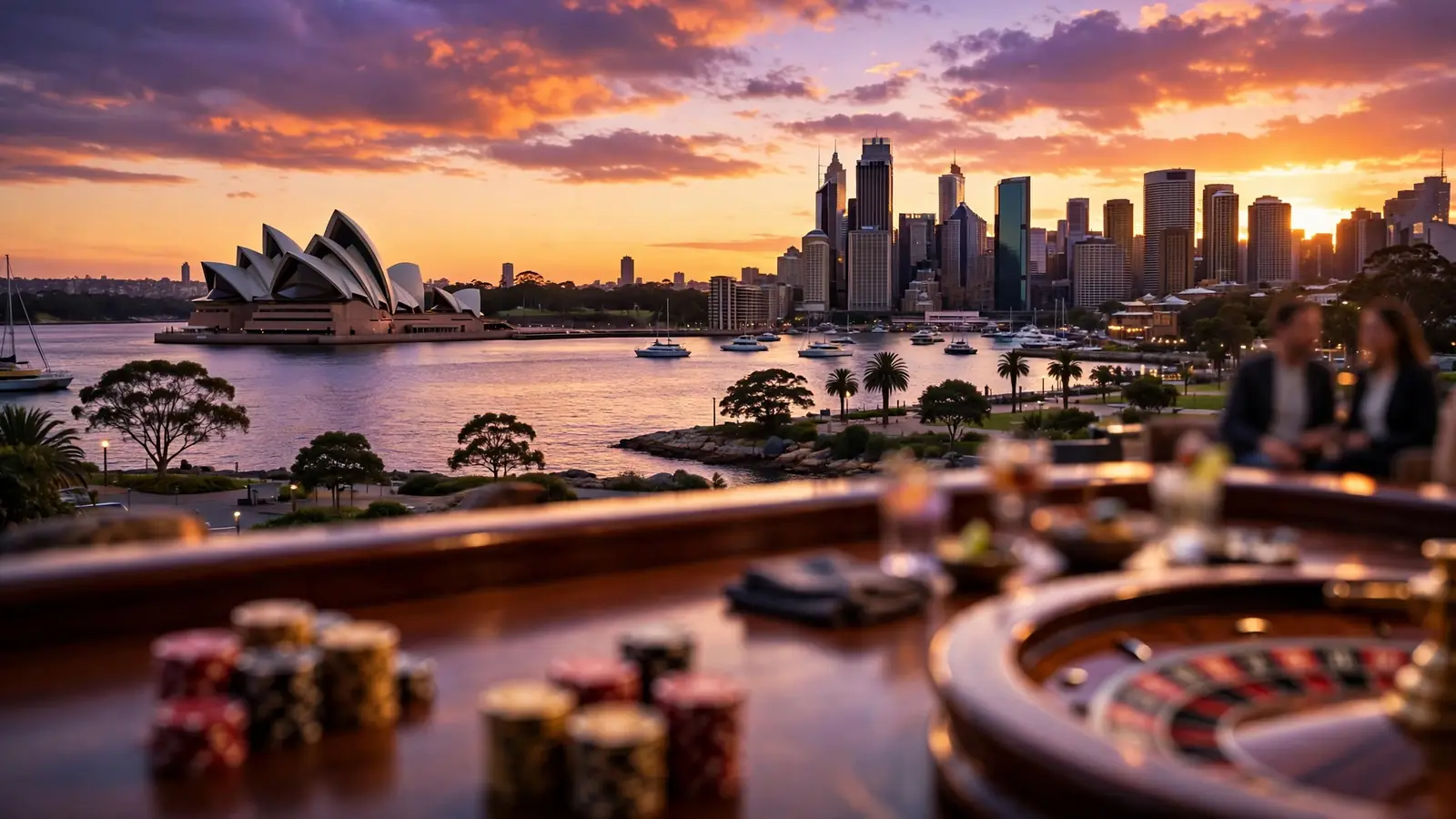
The useful question is not simply whether a result says “near” an airport, CBD or destination. It is whether you can identify the actual venue and compare its stated location with your own starting point and plans. If those details are unclear, the search result has not yet given you enough information to plan a visit.
Venue Machines and On-Site Safeguards
A venue’s machine count can affect the safeguards it is required to have in place. A report by regionriverina.com.au describes a requirement for venues with more than 20 gaming machines to have a dedicated responsible gambling officer (RGO) on duty whenever those machines are operating. The report says the change begins on 1 July. Because this is a reported requirement, check with the relevant Tasmanian authority or the venue how it applies locally before relying on it.
The distinction between a venue being staffed and an RGO being on duty matters: the reported requirement ties the officer’s presence to machine operation. If a venue says it has an RGO, you can ask whether the role is covered during the period its machines are available. That is a more precise question than asking whether the venue has general customer-service staff.
The same report describes a one-month grace period for venues to remove signage and introduce responsible gambling officers. It also says venues will be required to keep a gambling incident register. The register is intended to record events that may indicate a patron is at risk of gambling harm or is already affected by it. These measures concern how a venue responds to risk; they do not establish that a particular venue has a specific number of machines or that it meets every requirement.
Signage is another part of the venue environment. Patrons should not be directed to gaming lounges by signs within eyeshot of ATMs or EFTPOS terminals. Signs directing patrons to ATMs should not be visible from gaming machines. These restrictions matter because the placement of a sign can connect access to money with access to pokies, even if the wording itself appears neutral.
When comparing venues, separate what you can observe from what needs confirmation. You may be able to see how machines are arranged and where signs or payment facilities are placed. The machine count, RGO coverage and incident-register arrangements may require a direct question to staff or confirmation from the relevant regulator. A venue’s description of its safeguards is not the same as independent confirmation that those safeguards meet the applicable rules.
This is a more useful way to assess a potential pokies venue than relying on a label such as “best”. That label does not tell you how many machines are operating, what safeguards are in place, or how concerns are handled. Ask specific questions about the venue’s procedures, and consider whether staff can explain them clearly. These checks concern venue operations; they do not establish where a venue is or when it is open.
Venues with more than 20 gaming machines are reported to require a dedicated responsible gambling officer (RGO) on duty whenever those machines are operating.
Online Pokies, the Spirit of Tasmania and What the Law Allows
Questions about pokies aboard the Spirit of Tasmania are separate from questions about land-based venues in Tasmania. The ferry’s name, route or connection with the state does not establish whether gaming machines are available on board. Treat that as a detail requiring confirmation from the ferry operator’s current information; do not assume that a reference to pokies describes an onboard service.
The same distinction matters when a search combines Tasmania with the name of a casino brand. A phrase such as “Crown” and “Tasmania” does not, by itself, confirm that a casino exists at a particular location or that it offers pokies. A venue’s identity and its machines need to be confirmed through reliable, current venue information. That is different from determining whether a real-money online service is lawful.
For online play, the central rule is the Interactive Gambling Act 2001. It prohibits companies from providing real-money online casino games, including pokies, to people in Australia unless the operator holds a domestic licence. No such licences have been issued, and there is no Australian-licensed online casino. A site’s use of Tasmanian wording, or its presentation of a welcome or no-deposit bonus, does not change that legal position.
The prohibition is directed at operators rather than individual players. Australians are not criminally liable simply for playing on an offshore site, but that does not make the site an Australian-licensed service or give it permission to offer online pokies here. Nor does the law provide a local route to recover winnings if an offshore operator refuses to pay. A displayed balance or a bonus offer is not the same as an enforceable right to receive money in Australia.
This creates an important difference between player liability and player protection. You may not face a penalty for playing, while still having no Australian legal recourse against an offshore casino over unpaid winnings. Do not treat the absence of player liability as evidence that an operator is authorised, that a bonus can be withdrawn, or that a dispute can be resolved locally.
The rules for online services do not answer whether a physical venue or a ferry has machines. Keep those questions separate: confirm any onboard or venue claim with the organisation responsible for that location, and assess online real-money offers under the national law. A search result or promotional label cannot establish either a machine’s availability in Tasmania or a lawful Australian online casino.
Why “24-Hour Pokies” Needs a Venue-Specific Check
A broad claim about 24-hour access does not tell you when a particular Tasmanian venue opens, or whether its pokies are available throughout its trading day. The phrase may describe a general category or an individual venue, but those are not interchangeable. To establish the hours that matter for your plans, use the venue’s own current operating information and check whether it refers to the venue as a whole or specifically to its gaming area.
Opening hours can also be described in ways that leave room for misunderstanding. A venue may be open while some facilities are unavailable, or the hours shown may apply to a different part of the business. Look for wording that clearly covers the pokies, and check the date or other indication that the information is current. If the details are unclear, contact the venue directly before relying on them. A general statement that Tasmanian venues offer round-the-clock access cannot settle the schedule of any one location.
“Open now” is especially time-sensitive: a result that appears relevant may not reflect a change to a venue’s current hours. Treat it as a prompt to confirm, not as proof that the pokies are operating at the time you plan to visit. The important distinction is between a venue’s advertised trading hours and the operating hours of its gaming machines.
There is also a separate staffing requirement. A report published by regionriverina.com.au describes a rule taking effect from 1 July under which venues with more than 20 gaming machines need a dedicated Responsible gambling officer (RGO) on duty whenever those machines are operating. This concerns supervision while machines are in use; it does not set a venue’s opening hours or establish that a venue operates continuously. The staff requirement and the venue schedule answer different questions.
When checking hours, keep those questions separate: is the venue open, and are its pokies operating during the period you intend to visit? A venue’s general trading schedule alone may not answer the second. Nor does a staffing rule establish that any particular Tasmanian venue is open now. For a reliable plan, confirm current, venue-specific information that explicitly covers the machines, rather than inferring access from a broad claim about 24-hour pokies in Tasmania.
How to Read Claims About Tasmanian Pokies
A claim about pokies in Tasmania can refer to several different things: whether a particular game is available, its stated return setting, the size of a permitted bet, or the conditions attached to a cash payout. These are separate claims. Evidence for one does not establish the others, and a broad description of Tasmanian pokies does not identify a specific game or venue.
Treat a return-to-player figure as a setting that needs context, not as a universal property of a game. A specialist review reports that some providers allow casinos to choose between multiple RTP settings for the same pokie. As a result, a percentage quoted for one casino cannot automatically be applied to that game at another. To assess a specific figure, you would need to know which casino and setting it refers to, and whether the information is current. If those details are absent, the figure does not tell you what setting applies at a particular Tasmanian venue.
Even a correctly identified RTP setting is a long-run measure, not a forecast for your session. It describes a statistical return across many plays, rather than the amount you should expect to receive from a particular visit. It cannot tell you whether the next spin will win, how long a balance will last, or whether a specific player will recover previous losses.
Each spin is an independent random event produced by a Random Number Generator. The result of an earlier spin does not make a later result “due”, and a sequence of wins does not establish that another win is more likely. Likewise, a run of losses does not indicate that the machine is about to pay. A claim based on recent outcomes confuses a past sequence with the mechanism determining the next result.
Claims about maximum bets and maximum cash payouts need their own evidence. A stated maximum bet is not a measure of likely returns, and a payout ceiling is not a promise that the ceiling will be reached. Without rules for the specific game and the applicable venue, neither phrase is enough to compare machines or predict what you could collect. Do not treat an amount presented without its conditions as a complete description.
The same caution applies when a place name is attached to a claim. A reference to Parkes, for instance, does not by itself establish that a named pokie is available there, or that a particular bet or payout limit applies. Look for information tied to the actual game and venue, and distinguish a documented setting or rule from a general promotional statement. If the detail cannot be checked, the sound conclusion is not that one machine is better; it is that the claim does not support that comparison.
Online Play on a Phone or Browser: Legal Limits
Using a phone instead of a computer does not change the legal status of real-money online pokies. The relevant distinction is not the device or whether you open a game in an app or browser; it is whether a company is providing the service to someone in Australia.
Under the Interactive Gambling Act 2001, companies cannot offer real-money online pokies to Australian residents unless they hold a domestic licence. No such licences have been issued, and Australia has no licensed online casino. A website’s Tasmanian branding, local wording or claim that it serves players in the state does not create a domestic licence.
This matters when you encounter pages describing online pokies as being “near” Tasmania, or suggesting that a phone can provide access to local casino play. “Near” may describe a phrase used to find information, but it does not establish that an online service is based in Tasmania, operates under Australian authorisation or is lawful for a company to offer to people here. A browser can display a page; that technical ability is separate from the provider’s legal permission.
The same distinction applies to claims about the best-paying games or high-limit play. Those descriptions do not establish that an online casino is licensed in Australia. Nor does a game’s availability on a mobile screen prove that it is an authorised real-money service. Treat claims about online Tasmanian pokies as descriptions of a webpage unless they can be assessed against the actual legal position: there is no Australian-licensed online casino, and companies may not provide real-money online pokies to Australian residents under a domestic licence that does not exist.
Legal Risk
The Interactive Gambling Act 2001 prohibits companies from providing real-money online casino games to people in Australia without a domestic licence, and no such licences have been issued.
If you are checking whether a service is lawful, focus on who is offering it and what kind of gambling it provides—not on the device, a location label or the appearance of a game. A site that presents itself as a Tasmanian casino does not become a land-based venue, and a mobile game does not become a legal local pokie because it loads successfully. For real-money online play, the absence of an Australian-licensed online casino is the key limit.
Those are separate questions requiring venue-specific information.
CBD Clubs: Confirm the Venue, Not Just the Search Term
A result for a club in a Tasmanian CBD does not establish that the club has pokies. It may identify a social club, a venue with a similar name, or a listing that does not describe its current facilities. Treat the name and location as clues to check, not proof that gaming machines are available.
Before making plans, confirm the exact venue with its own current information or contact it directly. Ask whether it has pokies and whether visitors can use them; a club’s name alone does not tell you who may enter or what facilities it provides. Check that the contact details refer to the venue you intend to visit, particularly where names are similar. A directory entry or map result can help identify a place, but it cannot answer every question about its facilities.
The phrase “best pokies” can also mean different things. It might refer to the venue, the range of machines or a particular game. Without confirmed information about what a venue offers, a ranking would imply comparisons that cannot be established. A club’s location in a CBD does not show that its machines are better, more numerous or more suitable for you.
If self-exclusion is relevant, ask the venue what process it provides and what that process covers before relying on it. Self-exclusion is a responsible-gambling tool, but the availability and operation of a particular arrangement should not be inferred from a general listing. Deposit, loss and session-time limits are other responsible-gambling tools; they are separate from confirming whether a club has pokies.
Keep these checks distinct: identify the exact club, establish whether it offers the facilities you are seeking, and clarify any access or self-exclusion arrangements directly. Do not treat a broad label such as “CBD club” as confirmation of any of those details. That approach avoids confusing a place’s name with evidence about its machines or safeguards.
Cashless Play and Searches for Newcastle
“Cashless” describes how a payment is made; it does not identify a particular pokie or tell you which venues have machines that accept non-cash payments. A venue’s general payment facilities also do not, by themselves, confirm that the same methods can be used at its gaming machines. If this feature matters to your visit, check the venue’s own information or contact it directly. Ask specifically whether its pokies support cashless play, which payment methods apply, and whether any conditions affect their use.
Treat payment details as separate from claims about a game’s return or quality. A cashless option is not evidence that a machine has a particular return setting, and it does not make outcomes predictable. Each spin remains an independent random event.
The phrase “Newcastle” needs the same care. A place name in a venue description or search result does not establish that the venue is in Tasmania. Before relying on a result, confirm the venue’s full location and make sure it is the place you intend to visit. Do not assume that a result mentioning Newcastle refers to a Tasmanian venue, or that a venue associated with Tasmania is in Newcastle.
Keep the checks separate: confirm the location, then confirm the venue’s machine and payment details. A listing that says “cashless” may refer to a venue service rather than a pokie payment method, while a listing that says “Newcastle” may refer to a different place. Clear answers to both points help you avoid planning around an assumption. If the venue does not specify how cashless play works, ask before travelling rather than treating the label as confirmation.
Are online pokies legal for Australian players?
Yes, Australian players are not targeted by the law and can play on offshore sites that accept them. However, no Australian-licensed online casino exists, and operators cannot offer real-money online pokies to Australians without a domestic licence.
What is the legal age for online gambling in Australia?
You must be at least 18 years old to gamble online in Australia.
What does “wagering requirement” actually mean?
It is the amount you must bet before you can withdraw bonus-related winnings. For example, a $500 bonus with a 40x requirement means you must wager $20,000.
Published by the Levelupcasino1.net team.