Bonus Buy Slots in Australia: Features and RTP
 Available in AU
A practical look at feature entry, RTP limits, game versions, demo play and the cost of buying a bonus.

Table of Contents
- How a Bonus Buy Changes the Slot’s Feature Sequence
- What RTP Can—and Cannot—Tell You Before You Buy a Feature
- Check the Game Build Before Choosing a Casino
- Which Slots Let You Buy a Bonus—and What the Examples Show
- What a Free Bonus-Buy Session Can Help You Test
- Why Demo Spins Do Not Predict Your Next Result
- Playing Bonus-Buy Slots Online from Australia: Legal Limits and Access
- Free-Play Bonus Buys: Separate the Test from the Wager
- Compare Bonus-Buy Costs with the Slot’s Stake Range
How a Bonus Buy Changes the Slot’s Feature Sequence
A bonus buy changes the point at which you enter a slot’s feature. In the ordinary sequence, you make a spin and the game proceeds according to its standard rules; a feature begins only if its stated trigger occurs. With a bonus-buy option, you can instead pay to enter that feature directly. It is a different entry route, not a change to the feature’s internal rules.
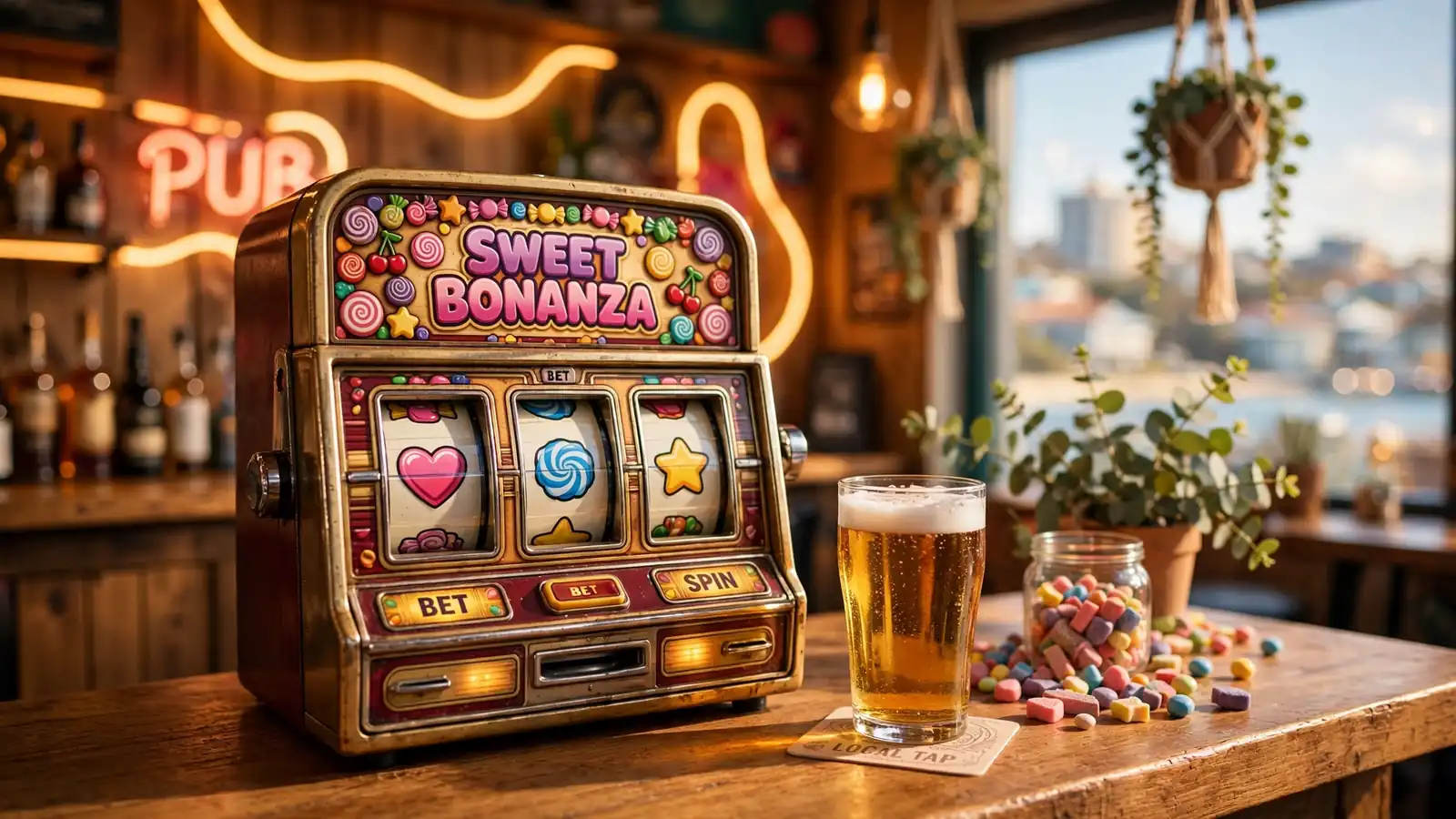
Sweet Bonanza illustrates the distinction. During ordinary play, scatters can trigger free spins. A specialist review describes four or more scatters as usually awarding 10 free spins. That is a reported version of the game’s rules, rather than a guarantee that every build will behave identically. If the feature is bought, you bypass the wait for that scatter trigger and move to the feature entry point.
What happens after entry is separate from how you got there. In Sweet Bonanza’s free-spin feature, multiplier bombs can appear. The same specialist review says their values are added together before being applied to a winning tumble. In other words, the bombs do not alter the scatter requirement or create the free-spin round; they affect the calculation when a qualifying tumble occurs during that round.
Bonus buy slots let you access a feature round directly, so it’s worth checking the terms and payment details before choosing where to play. This list gives you a concise reference to the available operator information.
License: Curacao eGaming (Roby Games Ltd) Roby Casino is listed with a Curaçao eGaming license held by Roby Games Ltd. You can use that licensing detail as a starting point when considering the operator.
License: Curacao Gaming Control Board OGL/2023/176/0095 (Hollycorn N.V.) LuckyVibe is licensed by the Curaçao Gaming Control Board under OGL/2023/176/0095, with Hollycorn N.V. named as the license holder. You can use these details to identify its stated regulatory basis.
License: Curacao Gaming Authority (Jumpman Gaming Ltd) DragonSlots Casino is listed under a Curaçao Gaming Authority license, with Jumpman Gaming Ltd. as operator. That is the available detail to consider when assessing this option.
Payout speed: crypto under 1 hour, PayID 1-3 business days · Min. deposit: A$20 (A$30 to qualify for the bonus) Ricky Casino lists crypto payouts in under an hour and PayID payouts in 1–3 business days. You can deposit from A$20, though A$30 is required to qualify for the bonus.
License: Curacao, operated by Dama N.V. 7Bit Casino is listed as operating under a Curaçao license and is operated by Dama N.V. You can use those details as a basic reference when considering it.
License: Curacao Gaming Control Board OGL/2023/176/0095 (Hollycorn N.V.) Rollero Casino is licensed by the Curaçao Gaming Control Board under OGL/2023/176/0095, with Hollycorn N.V. named as the license holder. Its stated license details are the key information available here.
Payout speed: crypto 30-120 minutes, fiat 24-72 hours · Min. deposit: A$30 MrPacho lists crypto payout times of 30–120 minutes and fiat payouts of 24–72 hours. The minimum deposit is A$30.
License: Curacao OGL/2024/1335/0780 · Min. deposit: EUR 20 Vegaz Casino lists a Curaçao OGL/2024/1335/0780 license and a minimum deposit of EUR 20. You can use these details as a starting point when reviewing the operator.
License: Curacao Golden Pokies is listed with a Curaçao license. No other operator details are provided here, so check the information available to you before deciding.
License: Curacao · Min. deposit: A$20 (POLi) Lucky Dreams lists a Curaçao license and a minimum deposit of A$20 via POLi. Those are the available details to consider when reviewing this option.
This sequence matters because “buying the bonus” does not mean buying a particular result. It provides direct access to a feature whose outcomes still depend on the game’s rules. A bought feature and a scatter-triggered feature can therefore begin at the same stage while reaching it by different routes.
When reading a game’s feature description, separate three steps: the ordinary spin, the trigger that awards the feature, and the events that can occur once the feature is active. A bonus buy replaces the trigger-and-wait step with direct entry. The free spins and their multiplier mechanics remain part of the feature itself. Keeping those steps distinct makes the term “bonus buy” more precise: it describes an entry method, not a prediction of what the feature will produce.
What RTP Can—and Cannot—Tell You Before You Buy a Feature
RTP, or return to player, is a theoretical measure of a slot’s expected performance across a very large number of spins. The calculation is based on outcomes accumulated over a scale that may run to millions of spins. It describes long-run behaviour, not a promise about what you will receive in one session.
That distinction matters when you are considering a bonus-buy feature. Buying entry changes how you reach the feature: you bypass the ordinary wait for its trigger. RTP does not tell you what that particular feature will pay, whether it will produce a win, or how a specific sequence of outcomes will unfold. A displayed percentage is not a forecast for the next spin or bonus.

Reading the percentage correctly
A higher RTP theoretically corresponds to a better return over time than a lower RTP. This makes RTP useful as one point of comparison between games, provided you treat it as a long-run statistical measure. It does not mean that a game with the higher figure will pay more during your session, or that a bonus bought in that game will be more successful.
The calculation averages outcomes across extensive play. Individual results can differ substantially from that average because the figure is not designed to describe a short run. Nor does it show how frequently wins occur or how large they are when they do occur. Those are separate aspects of a game’s behaviour; RTP alone does not explain them.
A bonus buy does not turn the RTP into a feature-specific return figure. Unless the game presents a separate, clearly defined measure for a feature, the displayed RTP should not be read as the expected return from buying that feature once. It is the game’s theoretical long-run measure, not a valuation of a single purchase.
Where to check
Look in the game’s rules or paytable for the RTP. These are the places where the game’s information is usually displayed. Check the figure in the game itself rather than relying on a description elsewhere: the number is meaningful only when you know which game information you are reading.
Attention: An RTP of 96% or higher is a screening point and a theoretical measure of long-run performance, not a guarantee of a result for any particular session or bought feature.
Players are advised to look for games with an RTP of 96% or higher. Treat that as a screening point, not a guarantee or a dividing line between a safe and an unsafe result. A figure at or above that level still describes theoretical performance over extensive play. It cannot ensure that a particular session, spin, or bought feature will return a given amount.
The practical use of RTP is therefore limited but clear: it helps you compare stated long-run theoretical returns, while leaving individual outcomes uncertain. It cannot tell you whether buying entry is worthwhile for you, what a feature will pay, or how soon a favourable result might occur. Keep those questions separate from the percentage, and do not mistake a long-run average for a prediction.
Check the Game Build Before Choosing a Casino
A game’s title and artwork do not tell you which RTP configuration is active. A specialist review reports that the operator selects the RTP build offered through its game, while the lobby tile does not show that setting. The practical implication is that a game’s displayed name is not enough to identify its configuration. You need to inspect the information provided inside the game itself.
This check matters for a bonus-buy game for the same reason it matters for ordinary play: the feature name does not identify the RTP build. A lobby may show the game and its bonus-buy option, but that screen is not evidence of the configuration attached to the version that opens. Treat the lobby tile as a way to locate the game, not as a source for its RTP.

Where to look in the game
Open the game and find its information panel, rules or paytable. The RTP is usually displayed in the game’s rules or paytable, so look there for the figure assigned to the version you are viewing. If the panel offers several information tabs, read the relevant details rather than relying on a short lobby description.
Check the panel before wagering. This sequence matters: first open the game, then verify its displayed configuration, and only then decide whether to proceed. A figure shown elsewhere may relate to a different version or build; the in-game information is the place to confirm what is displayed for the game currently loaded.
The panel is also useful because it ties the information to the game itself rather than to a general description. If the figure is absent, unclear or inconsistent with what you expected, do not assume that the lobby tile resolves the discrepancy. Pause rather than treating an unverified value as confirmed.
Keep the game name separate from its build
A title can remain the same while the RTP configuration differs. That means two pages or tiles bearing the same game name need not establish that the same build is being offered. The name identifies the product; the information panel is where you check the configuration in the version opened.
- Open the game and find the information panel, rules or paytable
- Verify the displayed configuration inside the game before wagering
- Confirm the active RTP build within the loaded version
- Rely on the lobby tile or game name to identify the RTP configuration
- Use a remembered figure as a substitute for an in-game check
- Assume a general statement about a game confirms the value of a specific version
This distinction is easy to miss when a casino bonus-buy page groups games by title or feature. The presence of a bonus-buy label tells you that the game is being presented with that feature; it does not, by itself, disclose the RTP setting. Nor does a general statement about a game necessarily confirm the value displayed by the particular version you open.
Avoid using a remembered figure as a substitute for checking. Even when you recognise the game, the relevant question is not simply what RTP you have seen associated with that title. It is what the active game’s own information panel displays. For a bonus-buy casino listing, that check should apply to the game configuration, not just to the feature description.
What the check can establish
The panel can show you the RTP stated for the loaded game. It cannot turn that theoretical figure into a forecast for an individual spin or bonus feature. A configuration check is about identifying the version being presented; it does not tell you what a particular session will return.
Keep the check narrow and concrete. Confirm that you have opened the intended game, locate its rules or paytable, and read the RTP shown there before wagering. Do not infer the figure from the lobby, the title, or a general description of a buy-bonus game. If the information panel does not make the configuration clear, the uncertainty remains; a tile cannot fill that gap.
This is a verification step, not a method for ranking casino bonus-buy options. It does not establish that one operator is suitable, nor does it make a bonus-buy feature more predictable. Its purpose is simply to prevent a basic mismatch between the game you think you are opening and the RTP configuration displayed inside it.
Which Slots Let You Buy a Bonus—and What the Examples Show
A bonus-buy option is a feature of a particular game build, not a general setting that applies to every pokie. When it is available, it lets you pay to enter a feature directly instead of relying on the ordinary spin sequence to trigger it. The important first step is therefore to establish whether the game itself offers that choice. A casino’s lobby tile, game name or promotional description is not enough to confirm it.
Open the game and inspect its own controls and information. Look for an option explicitly described as buying or entering a feature, rather than assuming that a bonus symbol, free-spin mode or feature label means it can be purchased. Read the rules or help panel as well: it should explain what the option does and any conditions attached to it. If the game offers no clearly labelled purchase choice, treat the feature as unavailable unless the game’s own information confirms otherwise.
Identify the option in the game
A reliable check follows the feature from the control to the rules. First, identify whether there is a separate control for entering a feature. Then confirm that the game’s information describes that control as a paid entry, rather than a way to start ordinary play or review instructions. Finally, check what feature the purchase activates. A game may have several features, and a button that enters one does not imply that every feature can be bought.
Confirming Bonus Buy
Check the game interface for a separate control explicitly described as buying or entering a feature.
Confirm in the game’s information or help panel that the control is a paid entry and not a standard play trigger.
Determine which specific feature the purchase activates and read the associated costs and terms.
Do not infer availability from a general statement that a title has a bonus round. A bonus can be triggered during regular play without there being any paid entry route. Conversely, a game may present a purchase choice only in its interface or rules, so its name in a casino lobby may not tell you whether the choice is present. The distinction is between a feature that exists and a feature that the game lets you enter by paying.
The same care applies to the wording and price shown in the game. Read the displayed terms before selecting anything. Confirm which feature is being entered and what the game says the purchase costs; do not assume that the amount is fixed across games or versions. If the description is unclear, or the displayed controls do not match the rules, do not treat the option as confirmed.
What the named games establish
Sweet Bonanza and Blood Suckers are two titles to check when examining this subject. Their names alone do not establish that a bonus-buy option is available in the version you have opened. Confirm the option inside that game rather than carrying an assumption from another casino, a review or a different version.
A specialist review reports Sweet Bonanza with an RTP of 96.51%, while noting that versions may show a different figure. That RTP figure does not answer whether a bonus can be bought: it describes a separate statistical property of a game version, not the presence of a purchase control. For the bonus-buy question, the relevant evidence is the game’s own interface and rules. The figure should not be treated as a current value for every copy of the game.
For Blood Suckers, use the same test. Check the title’s own information and controls for an explicit paid-entry option. The fact that a game has a feature, or that a casino groups it with other bonus-focused games, does not establish that you can buy that feature. If no such option is clearly described, you have not confirmed a bonus buy.
This approach avoids turning a list of familiar titles into an unsupported claim about availability. A feature can depend on the particular version presented to you, so a title-level label is a starting point, not proof. The game’s own rules and controls are what show whether a purchase option exists in the version you are viewing.
Separate feature availability from game configuration
Finding a bonus-buy control answers one question: whether that game version offers paid entry to a feature. It does not answer a different question about the game’s configured RTP. Those details must not be substituted for one another. A visible buy option does not tell you the RTP, and an RTP figure does not prove that the feature can be bought.
Check the game’s information for each title you open, and base your decision on what that version actually displays. If the interface describes a purchase but does not make its terms understandable, pause rather than guessing. If it describes only a feature trigger during ordinary play, that is not evidence of a buy option. The practical distinction is simple: confirm the control, confirm the feature it enters, and read the game’s stated terms before choosing it.
A visible bonus-buy control only confirms that paid entry is available; it does not disclose the game’s configured RTP, and vice versa.
This method works across titles without assuming that all bonus rounds are purchasable or that a feature behaves identically in every version. Sweet Bonanza and Blood Suckers can be inspected using the same steps, but their names do not settle the result. Only an explicit option in the game’s own interface or rules confirms that you can buy a bonus there.
What a Free Bonus-Buy Session Can Help You Test
A free-play session can show you how a bonus-buy feature is presented and operated on screen. It lets you inspect the interface before deciding whether you understand its controls and sequence. That is a practical check of the game’s design, not a measure of how a real-money session would turn out.
Start with the game menu. Find where the bonus-buy option appears, how it is labelled and what information is shown before you activate it. Check whether the feature can be selected from the main screen or through a separate menu, and note which controls are available once the feature begins. If the wording or layout is unclear, pause and read the game’s help information rather than guessing what a button will do.
You can also follow the feature’s stages. Observe how the game moves from the selection screen into the bonus, what prompts appear during play and how the display indicates that the feature has ended. This helps you understand the order of events and distinguish feature-related screens from the ordinary game interface. A free session is particularly useful when several controls or status indicators appear at once: you can take time to locate them without making a real-money wager.

Pay attention to what the game explains, not just what it animates. Read the rules for the feature and compare them with the symbols, counters and messages shown during the session. If an on-screen label is abbreviated, the help panel may clarify its role. The goal is to learn how the feature communicates its operation, not to infer a reliable pattern from what happens on screen.
A free bonus-buy session can therefore help you decide whether the game is understandable to you. You can check whether the purchase step is distinct from ordinary play, whether the feature’s progress is visible and whether you can find the rules when you need them. These are interface and usability observations; they do not establish what a later session will produce.
Treat the free session as a way to inspect the game, not as a preview of a future real-money result. Seeing a feature play through may make its sequence familiar, but it cannot tell you what will happen if you later wager. Nor does a satisfying or disappointing demo session demonstrate that the feature is favourable or unfavourable. Keep the conclusion narrow: you have learned how the game presents and runs its feature, not what outcome to expect.
Testing a Bonus Buy
- Locate the bonus-buy option in the game menu
- Verify how the option is labelled and what information is shown
- Observe the transition from the selection screen to the bonus
- Identify the controls available once the feature begins
- Compare on-screen labels and symbols with the rules in the help panel
If you cannot locate the feature terms, understand the controls or tell when the feature has finished, that is useful information about your ability to follow the game. You do not need to continue simply because the option is available. A test is worthwhile only when it leaves you clearer about what the interface does and what remains uncertain.
Why Demo Spins Do Not Predict Your Next Result
A demo session can show you what a slot looks like when it produces different outcomes. It cannot tell you what the next spin will produce, whether you continue in demo mode or later play for real money. The reason is the way the outcomes are generated: each spin is a separate random event, produced by a Random Number Generator (RNG) and independent of spins before and after it.
That independence matters when you watch a sequence unfold. A run of losing spins does not make a win due, and a win does not make another win more or less likely on the next spin. The game does not use the recent demo history as a reason to compensate you or repeat an outcome. Looking for a pattern in a short run may feel informative, but it does not turn that run into a forecast.
What a demo session can establish
A demo lets you observe the game’s presentation and see how its outcomes are displayed. It can help you understand what happens on screen when different results occur. Those observations describe the session you have just seen; they do not provide information about the result of a future spin.

This distinction is especially important when trying a bonus buy slots demo. A feature appearing during a demo session is evidence that it appeared in that session, not that it will appear again soon or after a particular number of spins. Likewise, a quiet run in a demo does not establish that the game is “saving” a feature for later. Each new spin remains independent of the demo history.
The same reasoning applies if you buy a bonus in a demo mode. The result of that particular feature entry is one outcome, not a sample that predicts how a later entry will perform. A strong result does not make another strong result more likely, and a weak result does not mean the next one is due to improve.
Why short runs look like patterns
People naturally compare nearby outcomes. If several spins show similar results, it is easy to interpret them as a trend. But a sequence can look clustered or uneven without carrying a message about what comes next. Randomness does not require outcomes to alternate neatly or to distribute themselves evenly across a short session.
That can make demo play misleading if you treat what you see as a test of future performance. A long stretch without a particular result is not proof that the game is withholding it. Seeing the result repeatedly is not proof that it is now more likely to stop. Neither conclusion follows from independent spins.
A demo bonus-buy slot can therefore be useful for observing a particular outcome, but not for measuring when that outcome will occur again. One session cannot reveal a dependable timing pattern. Replaying the game until a preferred result appears does not change the independence of the next spin.
Attention: Every spin is an independent random event produced by an RNG; therefore, a sequence of outcomes in a demo session cannot be used to forecast future results.
Demo outcomes are not a promise about real money play
A demo result should not be treated as a preview of a later real-money session. It shows an outcome generated for that spin in demo play. It does not reserve the same outcome for another session, nor does it create a sequence that carries over when you change modes.
If you compare demo and real-money sessions, keep the question narrow: the demo can help you see how the game presents outcomes, but it cannot tell you what your next real-money spin will do. Previous outcomes do not become more predictive because you recorded them, watched them closely, or repeated the session.
The same limit applies to notes, screenshots and personal records. They can document what happened, but documentation does not make past spins influence future ones. A list of recent results may look like evidence of a trend; it remains a record of earlier independent events.
Use demo play to observe, not to forecast. When you close the session, the results you saw stay in the past. The next spin is a new random event, independent of every demo outcome before it and every outcome that follows.
Playing Bonus-Buy Slots Online from Australia: Legal Limits and Access
The legal position is about the service provider, not simply the game’s bonus-buy feature. Under the Interactive Gambling Act 2001, operators must not provide real-money online pokies to people in Australia. Locally licensed Australian operators therefore cannot legally offer online casino games such as slots. The law targets providers; an individual is not penalised merely for playing at an offshore site.
That distinction does not make offshore access equivalent to a locally regulated service. Sweet Bonanza can be reached by Australian players only through casinos licensed offshore. Those operators are outside Australia’s consumer-protection framework, so Australian protections and complaint pathways may not apply in the same way. A foreign licence does not make the casino locally licensed or change the Australian restriction on providing the service.
The Australian Communications and Media Authority (ACMA) enforces the Act and monitors compliance with federal interactive-gambling rules. It can ask internet service providers to block websites that offer prohibited services or advertise them in Australia. Following enforcement action, ACMA says it has blocked more than 1,455 gambling and affiliate sites since November 2019. Blocking can make a site inaccessible from Australia; it is an enforcement measure, not evidence that the service has become lawful or locally supervised.
Published figures for services that have left the Australian market since ACMA began enforcement in 2017 do not agree: one account gives more than 210, while another reports over 190. The difference should be noted rather than treated as a single settled count. In either case, the figures describe enforcement activity, not the safety or reliability of any particular casino.
Legal Warning
Under the Interactive Gambling Act 2001, operators must not provide real-money online pokies to people in Australia, and offshore sites operate outside the local consumer-protection framework.
Before depositing, review the current Australian rules and check BetStop, the national self-exclusion register, at betstop.gov.au. If you have registered with BetStop, consider how that self-exclusion applies before engaging with gambling services. Do not treat a site’s continued availability, payment options or claims about an offshore licence as proof that it is authorised to provide online pokies in Australia. The bonus-buy function changes how a game feature is entered; it does not alter the legal status of the service offering it.
Free-Play Bonus Buys: Separate the Test from the Wager
A free-play bonus buy and a bonus buy played for real money may display the same feature, but they are not the same kind of activity. In free play, the game uses a simulated balance; no money is staked and any displayed win is not a cash return. A real-money wager puts funds at risk. Keep that distinction clear when looking at a free demo that includes a bonus-buy option.
The free-play setting can help you understand what the feature displays and how its controls are arranged. It does not establish what you would receive from a paid feature. A result shown in a free session is not a sample that can be carried over to a later wager, and a sequence of favourable or unfavourable outcomes does not turn into a forecast.
The display may also differ between free play and a real-money version. Settings, available options or the game build can vary, so do not assume that a demo reproduces every detail of another version. If you are examining a particular game, treat the free session as a view of that session’s presentation, not proof that a paid feature will behave identically in every respect.
Online pokies use random number generators and have theoretical RTP percentages. Those properties do not make a free-play balance equivalent to funds at risk: the balance shown in a demo is for simulation, while a real-money wager has a financial consequence. Nor does a displayed theoretical RTP tell you what any individual feature purchase will return.
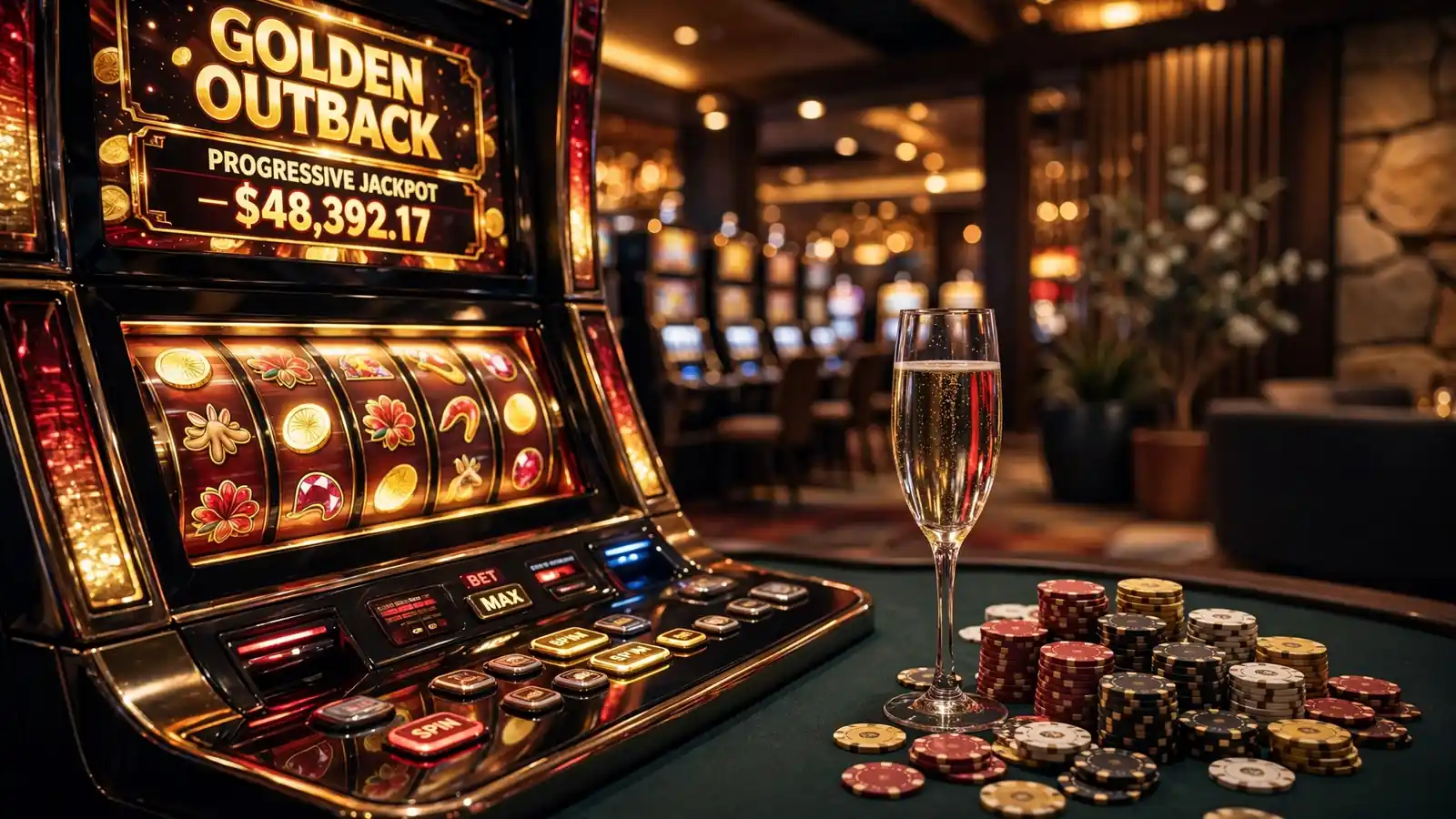
A useful boundary is therefore simple: free play can show you how a feature is presented, but it cannot validate the value of wagering on it. Do not use demo outcomes to justify a deposit, increase a stake or assume a particular result is due. Keep simulated results separate from financial decisions, and review the relevant local rules and self-exclusion options before considering any gambling activity.
Compare Bonus-Buy Costs with the Slot’s Stake Range
A per-spin stake and a bonus-buy price are different figures. The stake is the amount assigned to an ordinary spin; the cost shown for entering a feature directly is a separate amount. Sweet Bonanza’s stake range therefore cannot be read as the price of its bonus buy, nor does it indicate what that feature is worth.
A specialist review reports a Sweet Bonanza stake range of A$0.20 to A$100 per spin. Treat that as a reported range, not a setting guaranteed to appear at every casino. The upper limit can vary by operator, so the controls on one site may not match those on another. Check the game’s displayed stake options where you are playing rather than assuming the full reported range is available.
This distinction matters when comparing a feature’s displayed cost with the amount you would otherwise stake per spin. A low ordinary stake does not, by itself, establish that a bonus buy is inexpensive; a high stake limit does not show that buying the feature offers better value. The figures describe different parts of the game and should not be substituted for one another.
Before selecting a direct-entry feature, read the amount shown for that option and compare it with the stake you intend to use. Keep the two figures separate in your own calculations: one applies to the ordinary spin, while the other applies to the feature entry. The stake range is useful for understanding how much a regular spin can be set to, but it is not a comparison of bonus-buy prices across games or operators.
Are there any strategies for choosing slot games based on RTP?
Yes. Compare the RTP shown in each game’s rules or paytable, and consider games at 96% or higher as a screening point. Check the figure inside the game, since the active RTP build may differ between operators; RTP describes long-run performance, not a guaranteed session result.
How do you calculate RTP in slots?
RTP is a theoretical measure of a game’s expected performance across a very large number of spins, often millions. It describes long-run results, not what you should expect from a single spin or session.
Can Australian players legally play Sweet Bonanza?
Sweet Bonanza is available to Australian players through offshore-licensed casinos, while Australian-licensed operators cannot offer online pokies. Individuals are not penalised for playing at offshore sites, but those sites are outside Australian consumer protection and may be blocked by ACMA.
Does Sweet Bonanza have a Bonus Buy in Australia?
Sweet Bonanza has a bonus-buy route into its feature. Australian players can access the game only through offshore-licensed casinos, where the available game build and RTP should be checked in the in-game information panel.
Prepared by the Levelupcasino1.net editorial staff.